Government Sets Ambitious Steel Capacity Targets
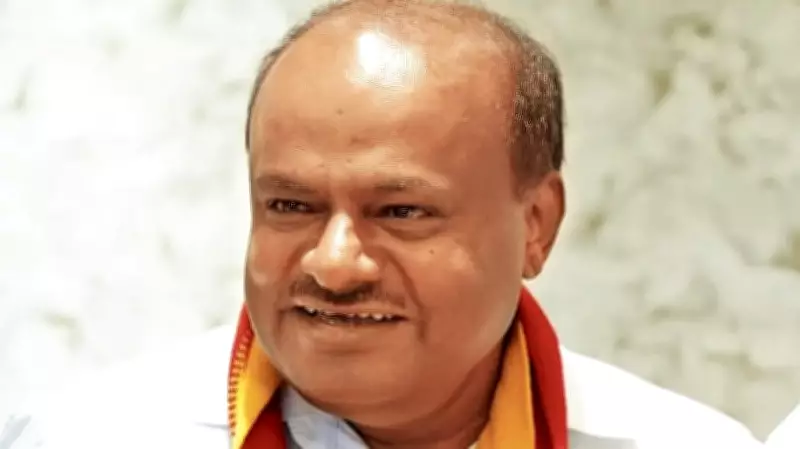
Union Minister for Steel HD Kumaraswamy announced on Wednesday that the Indian government is targeting a steel production capacity of 300 million tonnes (MT) by 2030 and 400 MT by 2035. Speaking at an industry event in New Delhi, the minister emphasized that the sector's future depends not only on capacity expansion but also on creating intelligent ecosystems that integrate technology and sustainability.
The current steel production capacity in India stands at approximately 180 MT, according to government data. The new targets represent a significant ramp-up, requiring an investment of over ₹10 lakh crore (about $120 billion) in the next decade, as per industry estimates.
Focus on Technology and Sustainability
Kumaraswamy stressed that the steel industry must adopt advanced technologies such as artificial intelligence, automation, and green production methods. "The future of the steel sector will not be shaped by production capacity alone but also by intelligent ecosystems," the minister said. He urged stakeholders to prioritize research and development to reduce carbon emissions and improve energy efficiency.

The government is also working on a national steel policy to provide a roadmap for achieving these targets, including incentives for using scrap-based steelmaking and renewable energy in production processes.
Impact on Economy and Employment
The expansion is expected to create over 2 million direct and indirect jobs, boost exports, and reduce India's dependence on imported steel. Currently, India is the world's second-largest steel producer, after China, and aims to become a net exporter of high-grade steel by 2030. The minister highlighted that the steel sector contributes about 2% to India's GDP, and the new targets could increase this share to 3% by 2035.
Industry bodies like the Indian Steel Association have welcomed the announcement, noting that achieving these targets will require policy support, infrastructure development, and skilled manpower. However, challenges such as land acquisition, raw material availability, and global market volatility remain.
Government Initiatives to Support Steel Sector
To facilitate the capacity expansion, the government has launched several initiatives, including the Production Linked Incentive (PLI) scheme for specialty steel, which has attracted investments worth over ₹30,000 crore. The minister also mentioned plans to develop steel clusters and improve logistics to reduce transportation costs.
Kumaraswamy concluded by calling for collaboration between the public and private sectors to build a resilient and globally competitive steel industry, aligning with India's vision of becoming a $5 trillion economy by 2025.