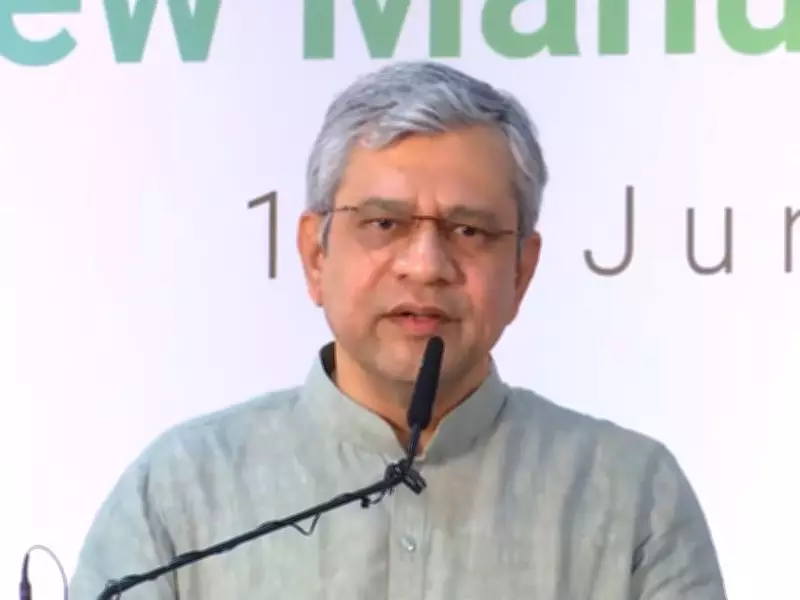
India's high-speed rail ambitions received a major boost after Union Railway Minister Ashwini Vaishnaw said Prime Minister Narendra Modi had approved seven new bullet train corridors, while work continues to gather pace on the flagship Mumbai–Ahmedabad High Speed Rail project.
First Section to Open Next Year
Speaking at a recent event, Vaishnaw said the programme was advancing steadily and that the proposed corridors were expected to reshape inter-city travel and strengthen economic connectivity across regions. He said the first section of the Mumbai–Ahmedabad bullet train corridor is expected to begin operations next year, marking a key milestone in India's first high-speed rail project.
Progress on Infrastructure
The National High-Speed Rail Corporation Ltd (NHSRCL) said electrification works were progressing steadily along the Mumbai–Ahmedabad Bullet Train Project, with overhead electrification (OHE) mast installation advancing across multiple stretches of the corridor. According to NHSRCL, more than 8,500 OHE masts have already been installed, representing significant progress in developing the infrastructure that will power future high-speed rail services.

Seven New Corridors Approved
Vaishnaw said Modi had approved seven proposed bullet train corridors: Mumbai–Pune, Bengaluru–Chennai, Bengaluru–Hyderabad, Pune–Hyderabad, Delhi–Lucknow, Delhi–Varanasi and Delhi–Siliguri. The routes are expected to drastically reduce travel times between major cities. The Mumbai–Pune corridor, for example, is projected to cut journey times to around 48 minutes, while travel between Pune and Hyderabad could take just over two hours.
Economic Connectivity
Vaishnaw said the expanding network would transform regional connectivity by creating integrated economic corridors. He added that cities including Mumbai, Pune, Ahmedabad, Surat and Hyderabad could become part of a closely linked economic ecosystem once the projects are completed.
Key Features of Mumbai–Ahmedabad Corridor
The Mumbai–Ahmedabad High Speed Rail (MAHSR) corridor, India's first bullet train project, is steadily moving towards completion and represents a significant milestone in the country's transport infrastructure. Spanning 508 km, the high-speed rail line is designed to operate at speeds of up to 320 kph, reducing travel time between Mumbai and Ahmedabad to around two hours. The project incorporates several advanced engineering features, including 25 river bridges along the route and India's first undersea rail tunnel.