Andhra Pradesh's Fishing Industry in Crisis as Boats Remain Anchored Pre-Ban
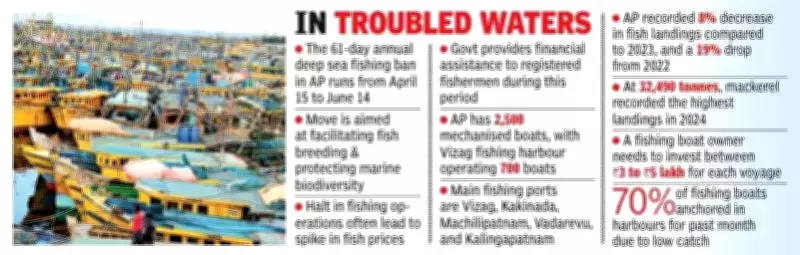
With approximately one month remaining until the annual 61-day deep sea fishing ban takes effect in Andhra Pradesh, the state's coastal fishing activities have already plummeted dramatically. Over 70 percent of mechanized fishing boats are currently anchored at harbors across the region, crippled by a combination of alarmingly low catch rates and soaring operational expenses.
Economic Unviability Forces Early Halt to Voyages
The traditional fishing ban commences annually on April 15, but this year, a significant portion of the fleet has been immobilized since late February. Boat owners and fishermen report catches that are 40 to 60 percent lower compared to previous seasons, making voyages financially unsustainable.
S Satyanarayana, a mechanized fishing boat owner in Visakhapatnam, revealed the dire situation: "Some fishing vessel owners are even contemplating selling their boats due to continuous losses in the trade. The economics simply no longer add up."

Soaring Costs and Dwindling Returns
Each mechanized fishing expedition requires a substantial investment:
- 3,000 to 4,000 liters of diesel
- Multiple tonnes of ice for preservation
- Essential commodities, salt, and safe drinking water
- Other necessary utilities
Total costs per voyage range between Rs 3.5 lakh and Rs 5 lakh. However, recent returns have been devastatingly low, with boats typically bringing in only Rs 3 to 3.5 lakh worth of fish, prawns, and crabs—resulting in consistent financial losses.
Statewide Impact on Fish Landings and Prices
According to the 2024 annual report from ICAR-Central Marine Fisheries Research Institute (CMFRI), Andhra Pradesh recorded 1.75 lakh tonnes of marine fish landings in 2024. This represents an eight percent decrease from 2023 and a concerning 19 percent drop from 2022 levels.
The price implications have been severe for consumers:
- Medium-sized silver pomfret now sells for Rs 1,200 to Rs 1,400 per kilogram
- Seer fish prices range between Rs 800 and Rs 1,000 per kilogram
- Overall prices for popular varieties have increased by 20 to 30 percent
Even when vessels return with decent prawn loads, market values remain unfavorable, failing to offset operational costs.
Fleet Composition and Geographic Spread
Andhra Pradesh's fishing fleet consists of:
- 50 percent mechanized boats
- 48 percent motorized boats
- 2 percent non-motorized traditional boats
Approximately 2,500 mechanized fishing vessels normally operate across key coastal regions including Visakhapatnam, Kakinada, Machilipatnam, Vadarevu, and Kalingapatnam.
Industry Leaders Appeal for Increased Government Support
Ch Veeraju, President of the Visakha Dolphin Boat Operators Welfare Association, highlighted the critical role of diesel subsidies: "The state government currently offers a subsidy of Rs 9 per liter of diesel, but we urgently need this increased to Rs 15 per liter. Most boat owners are incurring substantial losses due to low catch caused by marine pollution and other environmental factors."
Operational expenses have surged by 15 to 25 percent, with labor costs contributing significantly to the economic unviability of fishing expeditions. This perfect storm of challenges—diminishing catches, rising input costs, and inadequate subsidies—threatens the very survival of Andhra Pradesh's traditional fishing industry, potentially impacting thousands of livelihoods and the state's food security.