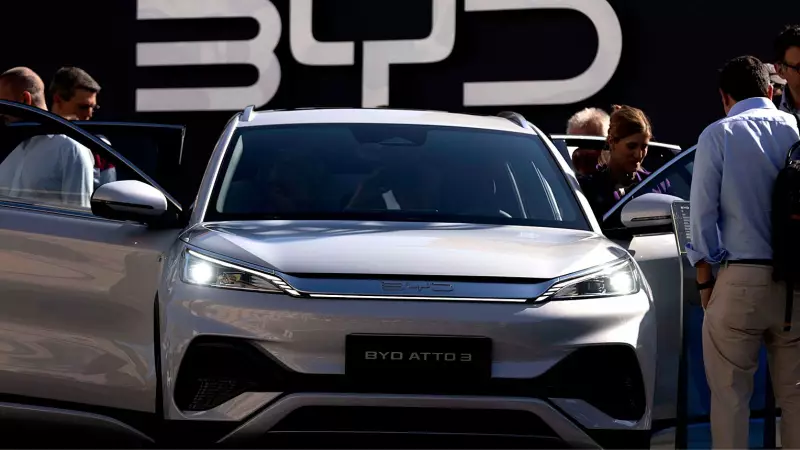
In a significant shift for the global automotive industry, Chinese automaker BYD has officially overtaken Tesla to become the world's largest seller of electric vehicles (EVs) for the year 2025. This marks the end of Tesla's long-held dominance in the EV market, as it reported a consecutive annual decline in deliveries.
The Numbers Tell the Story
On January 2, 2026, the figures revealed a clear changing of the guard. Tesla, led by Elon Musk, delivered 1.64 million vehicles in 2025, which is a 9 per cent decrease compared to the previous year. In contrast, its rival from China, BYD, reported robust sales of 2.26 million vehicles during the same period, securing the top position globally. The data underscores the intense competition and rapidly evolving dynamics within the electric mobility sector.
Factors Behind Tesla's Sliding Sales
Analysts point to a combination of external policy changes and internal brand dynamics that contributed to Tesla's downturn. A major factor was the dramatic shift in United States federal policy under the then newly elected President Donald Trump. In July 2025, the Trump administration introduced a 'big beautiful bill' that effectively reversed supportive EV policies.

This move phased out crucial tax credits that had significantly lowered costs for consumers. The credits, worth up to $7,500 for new EVs and $4,000 for used ones, were eliminated after September 30, 2025, dealing a severe blow to market incentives. Furthermore, Tesla faced stiffening competition from a growing number of international EV manufacturers.
Customer sentiment also played a role, with reports suggesting some buyers revolted against CEO Elon Musk's open alignment with right-wing politics and his support for then presidential candidate Donald Trump. Despite these headwinds, Tesla's stock showed resilience, finishing 2025 with a gain of approximately 11 per cent. Investors appear to be banking on Musk's future ambitions, which include transforming Tesla into a leader in robotaxi services and developing humanoid robots for domestic and office tasks.
Broader Implications and Future Outlook
This leadership change signals a pivotal moment. Tesla, which once aimed to sell up to 20 million cars annually by 2030 according to The New York Times, now faces a more crowded and challenging path. The company still commands a dominant 45 per cent share of the US EV market and was the biggest beneficiary of the now-revoked supportive policies.
The rise of BYD highlights the formidable scale and capability of China's electric vehicle industry. For global consumers and policymakers, this shift emphasizes that the race for electric mobility is truly a global contest, with innovation and market leadership no longer concentrated in a single region or company. The coming years will test how Tesla adapts its strategy to reclaim its crown in an increasingly competitive landscape.