

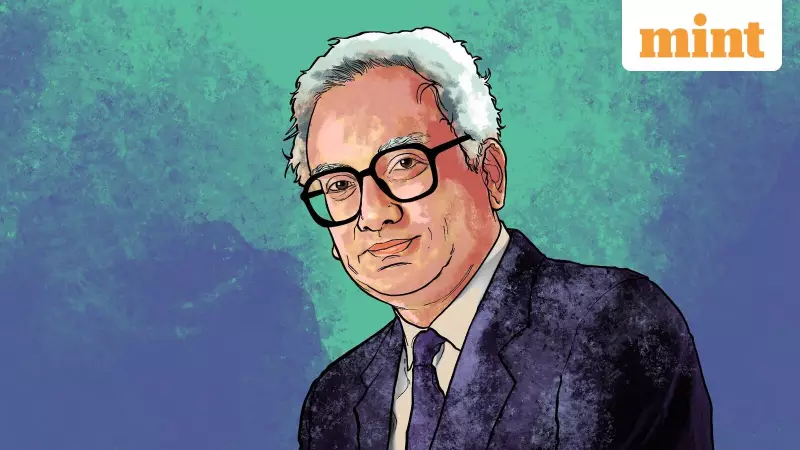
In the stifling era of India's Licence Raj, where industrial ambition was often choked by bureaucratic red tape, one young visionary chose a radically different path. While his contemporaries petitioned the government for permissions within India, Aditya Vikram Birla decided to look beyond the nation's borders, laying the foundation for India's first truly multinational conglomerate.
The Audacious Escape from a Constrained Economy
Born on 14 November 1943 in Calcutta (now Kolkata), Aditya Birla was an MIT-trained chemical engineer who returned to India in the mid-1960s. He entered a business landscape dominated by the Licence Raj, a system where every industrial activity required cumbersome government approval. Realizing that pseudo-socialist policies at home would severely limit his growth, he executed a strategic pivot in 1969 that was decades ahead of its time.
Instead of battling the system from within, he looked East, establishing ventures in Southeast Asia. This move was a stark contrast to his peers, who remained focused solely on navigating the domestic market. His first major overseas forays included setting up Indo-Thai Synthetics and Pan Century Edible Oils. The latter grew to become the world's largest single-location palm oil refinery.

Forging an Independent Legacy and Global Empire
Aditya Birla's journey was marked by a fierce streak of independence. In 1965, he famously resisted pressure from his legendary grandfather, Ghanshyam Das Birla, to take over the family's established aluminium business. He was determined to prove his worth away from the safety of the Birla name.
His global strategy paid off spectacularly. By 1995, his offshore ventures had generated global revenues exceeding ₹8,000 crore, with assets over ₹9,000 crore spread across 55 plants in countries including Thailand, Indonesia, Malaysia, the Philippines, and Egypt. He built dominant positions in heavy industries like viscose staple fibre and carbon black.
Despite his quiet and scholarly demeanor, Birla possessed a steely resolve rooted in national pride. He famously rebuked an American executive who questioned business ethics in India during the announcement of the Birla-AT&T partnership, defending the integrity of Indian companies.
A Lasting Legacy and Unfinished Story
Aditya Vikram Birla's untimely death from cancer in 1995 at the age of 51 cut short the life of India's pioneering multinationalist. He left behind a sprawling empire for his 28-year-old son, Kumar Mangalam Birla.
His son not only sustained the legacy but amplified it, weaponizing his father's global-first DNA. The 2007 acquisition of Novelis by Hindalco Industries Ltd for $6 billion was a direct echo of Aditya Birla's 1969 Thai venture. It transformed an Indian metal maker into the world's largest aluminium rolling company, a powerful vindication of his belief that the real limitation was never India's economy, but a failure of imagination.
While the Birla Group later faced challenges as the Indian economy pivoted towards services, Aditya Birla's core lesson remains vital. At a stage where India's development still critically needs manufacturing, his story is a timeless blueprint on how to outrun constraints by redefining the playing field itself.






