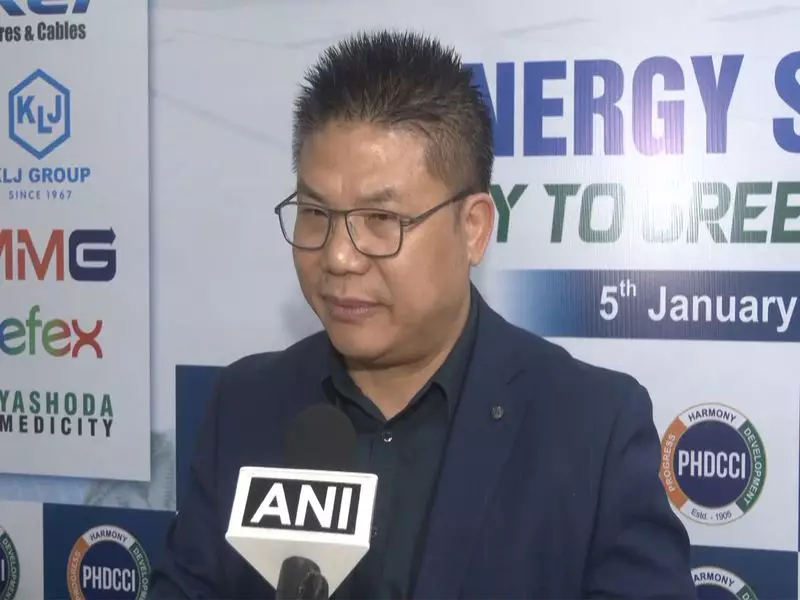
India possesses a significant opportunity to accelerate its ambitions in the critical sectors of semiconductor and advanced battery manufacturing by strategically learning from China's established playbook, according to a top industry executive. Wally Jang, the Managing Director of Welson Power, a major Taiwanese battery manufacturer with operations in China, emphasized that India should focus on building a comprehensive ecosystem rather than just isolated factories.
Learning from the Chinese Manufacturing Ecosystem
Jang pointed out that China's success in these high-tech manufacturing domains wasn't an overnight phenomenon. It was the result of a deliberate, long-term strategy focused on creating a fully integrated supply chain. "For India to become a global hub for semiconductor and battery manufacturing, it needs to look at the entire value chain," he stated. This involves moving beyond final assembly to developing domestic capabilities in raw material processing, component production, and advanced research and development.
He highlighted that China invested heavily in creating Special Economic Zones (SEZs) with world-class infrastructure, reliable power, and streamlined regulatory processes, which attracted global players. India can replicate this model by ensuring its proposed semiconductor fabs and gigafactories are supported by uninterrupted utilities and efficient logistics networks. The key lesson is to develop clusters where component suppliers, manufacturers, and R&D centers coexist, reducing costs and lead times.

Government Support and Skilled Workforce as Pillars
A critical factor in China's rise, Jang noted, was unwavering and predictable government policy support. This included subsidies, tax incentives, and facilitating technology transfers through joint ventures. India's Production Linked Incentive (PLI) schemes are a step in the right direction, but consistency and ease of accessing these benefits are crucial for attracting large-scale investments from companies like Taiwan's Welson Power.
Furthermore, Jang stressed the importance of human capital. China focused on creating a vast pool of engineers and technicians tailored for the electronics and battery industries. For India to succeed, a similar emphasis on specialized vocational training and university-industry collaboration is essential. "The talent is there in India, but it needs to be channeled and upskilled for these specific advanced manufacturing sectors," he added.
The Road Ahead for India's Strategic Sectors
The insights from Jang come at a pivotal time for India. The government has launched a $10 billion semiconductor mission and is pushing aggressively for electric vehicle (EV) adoption, which directly drives demand for advanced batteries. By analyzing China's trajectory, India can avoid potential pitfalls and fast-track its development.
Jang concluded that while competition exists, there is also immense potential for collaboration. Taiwanese and Chinese companies, with their mature expertise, can be valuable partners for Indian firms and the government in setting up these complex industries. The goal for India should be to integrate into the global supply chain for semiconductors and batteries, moving from import dependency to becoming a self-reliant exporter. Adopting a holistic ecosystem approach, inspired by successful models, could be India's fastest route to becoming a manufacturing powerhouse in these strategic sectors.