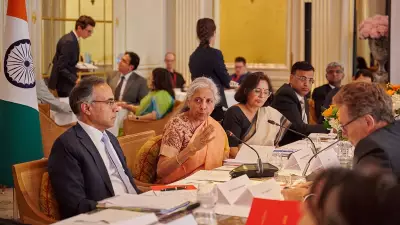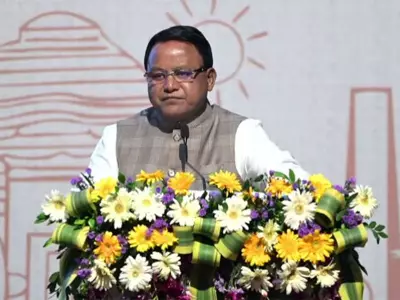
Union Finance Minister Nirmala Sitharaman on Tuesday asserted that India has the potential to capture a significantly larger share of the projected USD 179 billion global toy market by 2032. Speaking at the Toy Association of India’s 17th Toy Biz International B2B Expo, she highlighted the industry’s transformation over the last five to six years, driven by targeted government policies and trade agreements.
India’s Toy Exports Surge to 153 Countries
Sitharaman urged the Indian toy industry to set more aggressive export targets, rather than limiting themselves to the estimated USD 5 billion market by 2034. She noted that India’s toy exports reached USD 186 million in FY 2025–2026, spanning 153 countries. Meanwhile, toy imports, which were previously concentrated from a single country and included many inexpensive, harmful products, declined by 71% between 2019 and 2026.
Policy Measures Driving Transformation
The finance minister attributed this transformation to specific policy initiatives. To curb the dumping of risky imports, the baseline customs duty on toys was raised from 20% to 60% in February 2020. Additionally, the Bureau of Indian Standards intensified its enforcement at marketplaces and airports to ensure quality compliance.

National Action Plan for Toys and Cluster Development
Sitharaman pointed out that the 2024 Budget revised the National Action Plan for Toys, which integrates 14 key ministries for cluster growth, skilling, and creating a globally competitive manufacturing ecosystem. Under the MSME SPURTI initiative, toy clusters with infrastructure, design, and market access support have been established in Karnataka, Rajasthan, Tamil Nadu, Uttar Pradesh, and Andhra Pradesh.
Trade Pacts Open New Avenues
Trade agreements have created new opportunities for Indian toy exporters. The India-Australia ECTA and India-UAE CEPA now allow Indian toys duty-free access to these markets. Exporters can also benefit from the RoDTEP program, while small manufacturers can obtain loans under PM Mudra and CGTMSE.
Emphasis on Branding and Innovation
Sitharaman highlighted the importance of branding and creativity. She mentioned MeitY’s E-Toy-Cathon as an incubator for augmented reality games, coding kits, and domestic electronic toys. Digital public infrastructure such as ONDC, Account Aggregator, and UPI enables small-town artisans to sell directly to consumers. “Manufacturing is important but branding creates value,” she said, urging greater focus on branding. “Only when your brand is recognizable will it have enduring worth.”