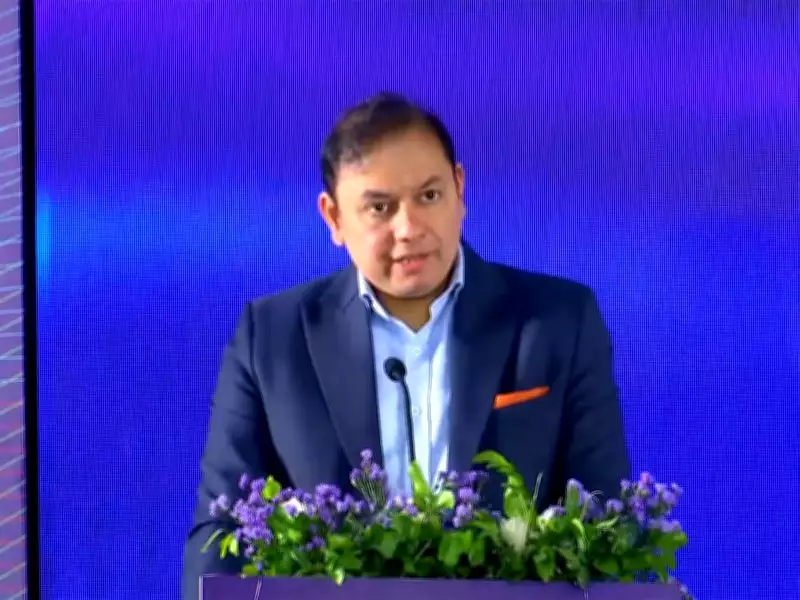
India must prioritize building intellectual infrastructure alongside physical infrastructure as its ambitions expand and challenges grow more complex, stated Pranav Adani, Director of Adani Enterprises, on Friday.
Speaking at the Foundation Day celebrations of the Chintan Research Foundation (CRF), Adani highlighted that historically, successful nations have invested in physical infrastructure such as roads, ports, airports, and digital connectivity to drive economic growth.
"As India's ambitions become larger, our challenges become more complex. Another form of infrastructure becomes equally important, and that is intellectual infrastructure. Nations require institutions that can think beyond immediate headlines, connect the dots, generate ideas, examine evidence, challenge assumptions, and help decision-makers navigate complexity," Adani said.

He noted that India's next chapter will not be written solely in New Delhi but will emerge from the experiences of states, innovation in cities, aspirations of villages, and resilience of communities. Citing examples like energy transition in Gujarat, climate resilience in Odisha, rural mobility in Bihar, urban regeneration in Maharashtra, vocational skilling in Uttar Pradesh, and connectivity in the Northeast, Adani stressed that "the most important lessons will be found close to the ground."
Adani emphasized that think tanks must engage deeply with rural populations across India. Institutions like CRF should act as a bridge between knowledge and implementation, national priorities and local realities, and ambitious policies and practical outcomes.
"Over the past year, my confidence in India's future has strengthened even more. Our economy continues to expand. Infrastructure continues to transform how people and goods move. Technology reshapes daily life. Indian entrepreneurs solve problems at scale. Internationally, India's voice commands greater respect and attention than ever before," Adani remarked.
He pointed out that as nations grow, issues become more complex—energy security, climate transition, artificial intelligence, demographic change, urbanization, water stress, geopolitical competition, and social inclusion are no longer future concerns but present realities. "Every successful nation in history has invested in physical infrastructure. Roads, ports, airports, power systems, logistics, and digital connectivity create the foundation of economic growth. At the Adani Group, we have had the privilege of participating in the nation-building journey and continue to create critical infrastructure supporting our nation's developmental aspirations," he added.
Adani described think tanks as part of intellectual infrastructure, whose role extends beyond analyzing events. "The real value of a think tank lies in its ability to identify emerging challenges before they become obvious, frame difficult questions before they become crises, and improve the quality of public debate by bringing evidence, perspective, and long-term thinking into conversations," he said.
He commended CRF for establishing itself within two years as a vital pillar of intellectual infrastructure for a rising India. The foundation has consistently brought together policymakers, diplomats, academicians, industry leaders, and practitioners to deliberate on issues ranging from energy security and critical minerals to AI, climate transition, and digital public infrastructure.
"The willingness to ask difficult questions is the most valuable contribution any think tank can make," Adani said, adding that success should be measured by whether institutions improve national conversations, help decision-makers think differently, and introduce ideas that might otherwise be overlooked.
Adani stressed that India's growth story must be projected globally. "As India's profile increases, the world will look even more closely at our choices, achievements, and challenges. India's growth must be projected, and the correct narrative created, because India's story is often not fully understood in international conversations," he said.

Referring to climate change debates, he noted that India is often viewed only through the narrow lens of emissions, while its efforts to expand energy access, lift millions into the formal economy, build infrastructure at an unprecedented scale, create jobs, strengthen manufacturing, and pursue one of the world's most ambitious renewable energy transitions are frequently overlooked. "If India does not tell its own story with confidence and credibility, others will tell it for us, often without fully understanding its complexity," he warned.
Adani asserted that think tanks have a profound responsibility in shaping global understanding of India, as "credibility will only come from intellectual honesty." Such institutions must present facts, evidence, and context so that India's successes, challenges, and aspirations are understood in their entirety.
With India aiming to become a developed nation by 2047, Adani said the country will require not only investments and innovation but also foresight, intellectual confidence, and institutions capable of connecting ideas with policy. "The coming decades will require not only investments and innovations, but also foresight. Not only economic capability, but intellectual confidence too. Not only infrastructure that connects places, but intellectual infrastructure that connects ideas to policy," he said.
"Looking at what CRF has achieved in a short period, I have no doubt it will continue to strengthen India's intellectual infrastructure, ask difficult questions, bring together diverse voices, engage more deeply with our states and regions, and contribute even more to India's journey to become Viksit Bharat by 2047. The future belongs not only to nations that build well, but also to nations that think well," Adani concluded.
He reiterated that CRF consistently brings together top policymakers, diplomats, academicians, industry leaders, and practitioners to discuss energy security, critical minerals, artificial intelligence, climate transition, and digital public infrastructure. "More importantly, it has shown a willingness to engage with questions that are not always easy, comfortable, or fashionable, but which are nevertheless very important. That willingness to ask difficult questions is the most valuable contribution any think tank can make," he said.