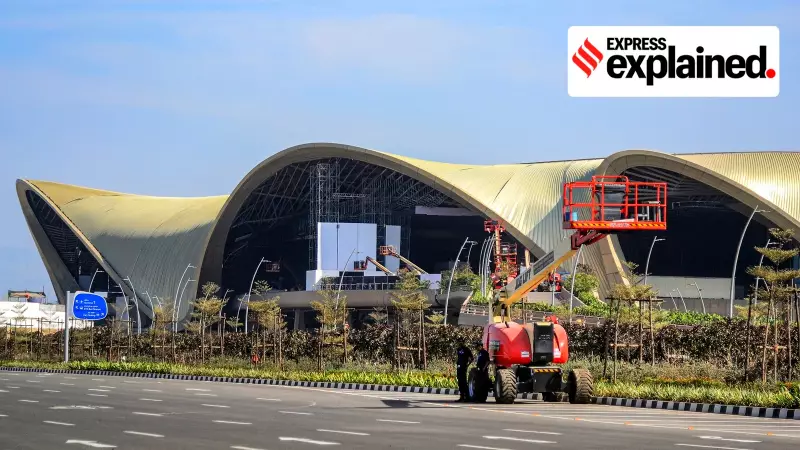
Mumbai's long-awaited second airport is finally ready for takeoff. The Navi Mumbai International Airport (NMIA) will commence commercial operations on December 25, 2025, marking a pivotal moment for aviation infrastructure in the country's financial capital. The inaugural flight, arriving from Bengaluru at 8 am, will signal the start of Phase 1 for this mega-project.
First-Day Operations and Initial Connectivity
On its opening day, the airport is scheduled to handle approximately 33 aircraft movements, including arrivals and departures. Passengers can fly to and from a host of major Indian cities right from day one. The initial network includes services to Ahmedabad, Bengaluru, Delhi, Hyderabad, Jaipur, Lucknow, Mangaluru, Nagpur, Goa, and Nanded.
Leading carriers IndiGo, Akasa Air, and Air India Express will operate daily flights from the new hub. Additionally, regional airline Star Air will connect Navi Mumbai with Nanded and other cities. Connectivity is set to expand rapidly through December and January, adding more destinations like Chennai, Kochi, Coimbatore, Jammu, Kolkata, and Vadodara to the map.

Addressing Mumbai's Critical Air Capacity Crunch
The launch of NMIA is a direct response to the severe capacity constraints at the existing Chhatrapati Shivaji Maharaj International Airport (CSMIA). Operating on a single runway amidst dense urban surroundings in Juhu, CSMIA has been functioning at or near its peak capacity for years, leaving no room for additional flights or peak-hour expansion.
Developed in phases, NMIA's Phase 1 is designed to handle 20 million passengers annually. Future expansions aim to boost this capacity to a staggering 90 million passengers per year with more terminals and runways, securing Mumbai's aviation growth for decades.
Cutting-Edge Features and Passenger Amenities
NMIA boasts several technological advancements intended to enhance efficiency and passenger experience. A key feature is the Category II Instrument Landing System (ILS), which will allow operations during poor visibility conditions like fog and heavy rain—a significant advantage.
The airport promises a swift 45-minute pre-flight turnaround time from arrival to curbside, supported by 42 aircraft parking stands. Its 5G-integrated systems will enable contactless travel via Digi Yatra, automated baggage handling with real-time tracking, and faster flight turnarounds. Passengers can use the in-house 'aviio' app for all airport-related information.
Cargo operations will begin simultaneously, leveraging a 0.5 million tonne annual capacity and temperature-controlled corridors for perishables and pharmaceuticals. Its proximity to the JNPT port further strengthens its cargo logistics potential.
Initial Challenges: Infrastructure Still a Work in Progress
While the terminal is ready, key supporting infrastructure around the airport remains under construction, which may pose initial hurdles for travelers.
Road access is a primary concern. Crucial links like the Ulwe coastal road connecting to the Atal Setu (MTHL) and the elevated airport link road over Amra Marg are incomplete. The bridge for the Ulwe road is only about 60% complete and is targeted for September 2026. Debris from ongoing work for Phases 2 and 3 also litters some approach roads.
Public transport connectivity is currently limited. The nearest railway station, Targhar on the Belapur-Nerul-Uran line, is 3.2 km away. With only about 50 suburban services daily, passengers from South Mumbai or Western suburbs face gaps of 30-45 minutes between usable trains. The Navi Mumbai Municipal Transport (NMMT) will operate 50-55 shuttle buses from Targhar, Seawoods, CBD Belapur, and Nerul stations to bridge this last-mile gap.
Urban amenities like hotels, restaurants, and hospitals in the immediate vicinity are still developing. The closest five-star hotels and major hospitals are several kilometres away in CBD Belapur and Kharghar. However, relief is coming in January with the opening of 'The Swirl', an 80-room transit hotel located inside the terminal building.

The launch of the Navi Mumbai International Airport is a landmark achievement for India's aviation sector, promising to decongest Mumbai's airspace and fuel economic growth in the region. While passengers may face some teething troubles with access, the airport itself stands as a modern, tech-ready gateway poised to transform air travel for millions.