Raipur-Visakhapatnam Economic Corridor to Revolutionize Eastern Seaboard Travel
Driving along the eastern seaboard is set to become significantly faster and more efficient with the upcoming Raipur–Visakhapatnam economic corridor. This ambitious infrastructure project promises to transform travel dynamics by cutting the journey time almost by half. Currently, the trip takes around 12 hours, but once the 464-km, six-lane, access-controlled highway is commissioned, it will be reduced to a mere 6–7 hours, according to officials.
A Pioneering Eco-Corridor for Chhattisgarh
This corridor marks a historic milestone for Chhattisgarh's highway network, being the state's first six-lane 'eco-corridor.' Spanning 464 kilometers, it is designed as a high-speed logistics spine that connects central India to the Visakhapatnam port. What makes this project stand out is its commitment to environmental sustainability. It aims to 'build fast' without causing significant disruption to fragile habitats, setting a rare example in large-scale road construction.
Key Features and Investment Details
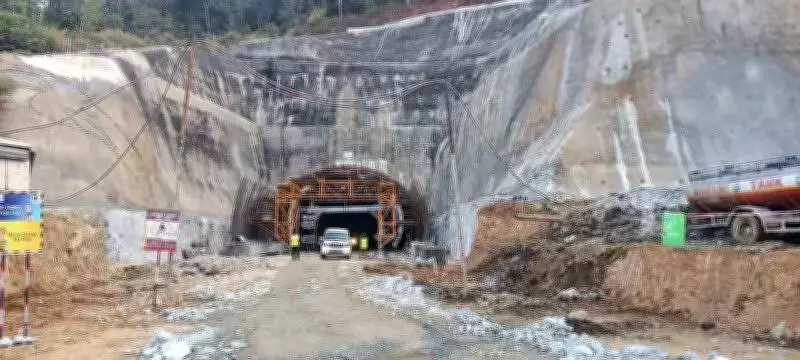
The project, with a substantial investment of ₹16,491 crore, includes several innovative elements. One of the most notable is a 2.79-km twin-tube tunnel constructed beneath the Udanti–Sitanadi Tiger Reserve. This eco-sensitive tunnel ensures that the tiger corridor remains undisturbed while the highway navigates through challenging hilly terrain. In Chhattisgarh alone, the corridor extends for approximately 125 km, developed across three packages between Jhanki and Marangpuri at an estimated cost of ₹4,146 crore.

Officials from the National Highways Authority of India (NHAI) report that the overall project has already surpassed the 70% construction mark. Designed for speeds of up to 100 kmph, the corridor is targeted for completion within the next two years, promising enhanced connectivity and economic benefits.
Comprehensive Wildlife Mitigation Measures
What truly sets this alignment apart is the extensive integration of wildlife-mitigation structures into the highway design. The plans are meticulously crafted to protect local fauna and ensure safe passage. Key features include:
- 28 monkey canopies in the Udanti–Sitanadi landscape to facilitate frequent primate movement.
- Eight overbridges specifically designed for elephant passage in the Dhamtari corridor.
- 19 animal pass-ways intended for species such as tigers and bears, ensuring minimal disruption to their natural habitats.
Additional safety infrastructure has been incorporated to further enhance protection. This includes:
- Animal underpasses and overpasses to provide safe crossing points.
- Fencing at critical locations to prevent wildlife from entering the highway.
- Camera-based monitoring systems for real-time surveillance and safety.
- Traffic impact attenuators designed to reduce fatalities in the event of collisions.
Economic and Environmental Benefits
The expected reduction in travel time is not just about convenience; it translates into tangible economic and environmental gains. By shortening the journey, the corridor will lead to lower fuel consumption and reduced emissions compared to current routes. This is particularly significant for freight movement, which will see direct improvements in efficiency.
The corridor is poised to ease the transportation of minerals, especially iron ore, towards the coast. It will also significantly improve connectivity for tribal and aspirational districts, including Dhamtari, Kanker, Bastar, and Kondagaon. This enhanced access is expected to boost market opportunities and services for lakhs of people in the region, fostering economic growth and development.
In summary, the Raipur–Visakhapatnam economic corridor represents a groundbreaking initiative that balances rapid infrastructure development with environmental stewardship. By halving travel time and incorporating advanced wildlife mitigation measures, it sets a new standard for sustainable road projects in India.