The 2026 Renault Duster: A Bold Comeback in India's Competitive SUV Arena
The iconic Renault Duster nameplate has made a spectacular return to the Indian automotive landscape with the launch of the 2026 model. Renault has officially confirmed that the price for this highly anticipated SUV will be unveiled in March of this year, with customer deliveries scheduled to commence from April 2026. This strategic move underscores the French automaker's ambitious plans to capture a more significant share of India's rapidly expanding and lucrative passenger vehicle market.
Navigating a Crowded and Competitive Segment
However, Renault's path to success with the new Duster is fraught with challenges. The 2026 Renault Duster enters one of the most fiercely contested segments in India, where it will lock horns with established heavyweights and formidable newcomers. Its primary rivals include the Tata Sierra, a fresh entrant generating considerable buzz, alongside the perennially popular Hyundai Creta and the robust Maruti Suzuki Grand Vitara. Both the Creta and Grand Vitara boast strong market credentials and loyal customer bases, setting a high bar for the returning Duster.
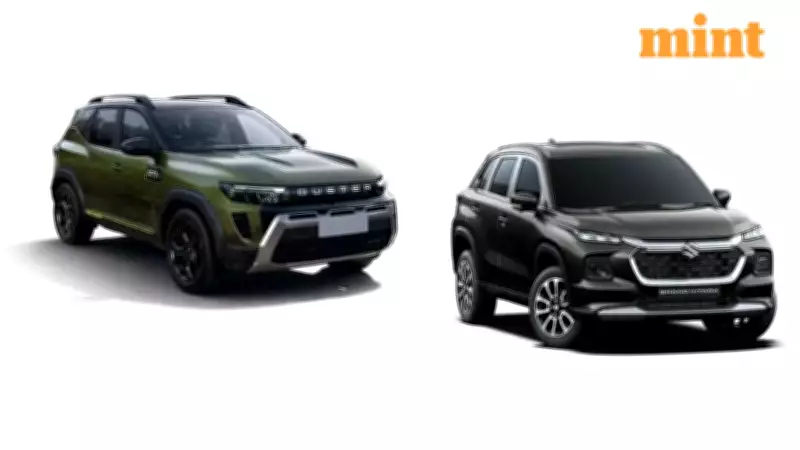
2026 Renault Duster vs. Maruti Suzuki Grand Vitara: A Detailed Dimensional Showdown
A head-to-head comparison with the Maruti Suzuki Grand Vitara reveals the Duster's physical advantages. The 2026 Renault Duster measures 4,346 mm in length, 1,815 mm in width, and 1,703 mm in height. In contrast, the Grand Vitara comes in at 4,345 mm long, 1,795 mm wide, and 1,645 mm tall.

- Length: The Duster is 1 mm longer.
- Width: It holds a 20 mm advantage in width.
- Height: The Duster stands 58 mm taller.
- Wheelbase: It also offers a 57 mm longer wheelbase at 2,657 mm compared to the Grand Vitara's 2,600 mm.
- Boot Space: Perhaps most notably, the 2026 Duster provides a substantial 518 litres of boot capacity, which is 145 litres more than the Grand Vitara's 373 litres.
Powertrain and Performance: A Battle of Technology and Options
Both vehicles offer three distinct powertrain configurations, but their approaches differ significantly. The 2026 Renault Duster's lineup is centered around turbocharged petrol engines. It features a 1.0-litre turbo-petrol unit and a 1.3-litre turbo-petrol engine paired with mild-hybrid technology. The range-topping option is a 1.8-litre naturally aspirated petrol engine coupled with a strong-hybrid system. Transmission choices include a 6-speed manual, a 6-speed DCT, and an 8-speed DHT, all driving the front wheels.
The Maruti Suzuki Grand Vitara, on the other hand, relies on naturally aspirated engines. Its offerings include a 1.5-litre NA petrol with mild-hybrid tech, a 1.5-litre petrol strong-hybrid, and a 1.5-litre petrol-CNG variant. It is available with a 5-speed manual, a 6-speed AT, and an e-CVT, offering both front-wheel and all-wheel drive (with the automatic transmission).
Key power figures highlight the differences: The Duster's 1.0L turbo produces 99 bhp and 160 Nm, while its 1.3L turbo mild-hybrid generates 160 bhp and 280 Nm. The Grand Vitara's 1.5L mild-hybrid makes 101 bhp and 139 Nm, its strong-hybrid puts out 114 bhp and 141 Nm, and the CNG variant delivers 86 bhp and 121.5 Nm.
While both SUVs incorporate mild and strong hybrid technologies, the Grand Vitara holds a unique card with its factory-fitted CNG option—a feature absent in the Duster's portfolio. This battle of powertrains, dimensions, and features sets the stage for an intense rivalry in the Indian SUV market, with the 2026 Renault Duster aiming to reclaim its past glory against stiff competition.