States Promote Tier-II and Tier-III Cities for GCC Investments at CII Summit
State governments are intensifying efforts to attract Global Capability Centres (GCCs) beyond traditional tech hubs, with senior officials from Uttar Pradesh, Maharashtra, Bihar, and Kerala highlighting new policy incentives, infrastructure development, and talent availability to position their states as next destinations for GCC investments.
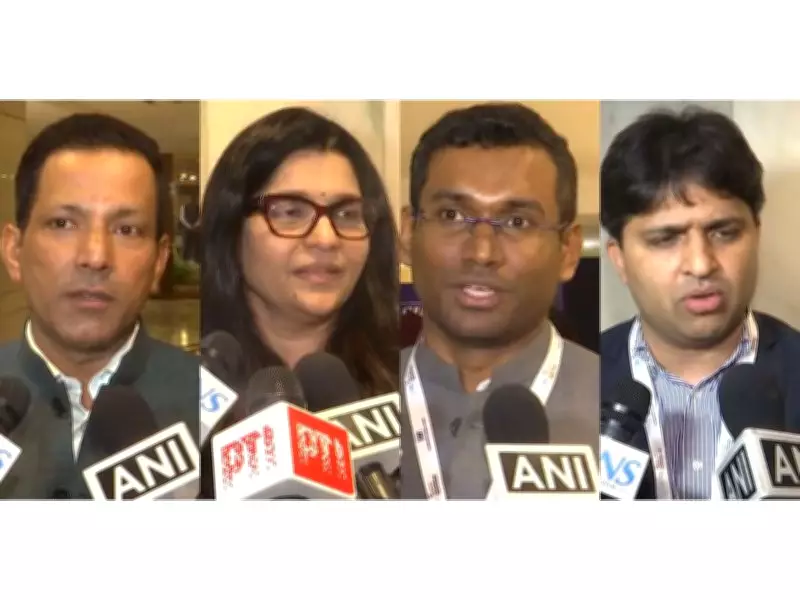
Speaking on the sidelines of the CII GCC Summit in New Delhi, government representatives told ANI that the next phase of GCC growth in India is expected to expand into tier-II and tier-III cities, supported by dedicated policies, plug-and-play infrastructure, and a skilled workforce.
Uttar Pradesh: Noida and Beyond
Uttar Pradesh, which already hosts a large GCC ecosystem in Noida, said it is now witnessing growing interest in other cities as well. Alok Kumar, Principal Secretary of IT & Electronics for the Government of Uttar Pradesh, stated, "As you know, UP is emerging as a leading GCC destination. Noida is already an established destination. We have almost 500 units of GCCs, 200-plus GCC companies operating there." He noted that Lucknow and other tier-II cities are becoming preferred destinations for global companies, backed by a strong incentive framework, world-class infrastructure, and a large talent pool.

Highlighting the changing nature of the industry, Kumar said artificial intelligence is reshaping the GCC workforce. "The most important thing is to make sure that with AI coming in in a big way, particularly the lower end, the jobs are being morphed by AI," he added, emphasizing that Uttar Pradesh's large pool of STEM graduates and technical institutions provides an opportunity to meet future talent requirements.
Maharashtra: Expanding Beyond Mumbai and Pune
Maharashtra said it is now focusing on expanding GCC investments beyond Mumbai and Pune into emerging cities. Varsha Thakur-Ghuge, Joint CEO of MIDC, stated, "Under the leadership of our CM Devendra Fadnavis, we are now focusing on the tier-3 and tier-4 cities like Nagpur, Nashik, Chhatrapati Sambhaji Nagar... We are looking forward for the good investment and next gateway for the GCC in Maharashtra." She said the state has introduced incentives under its industrial policy, including subsidies on stamp duty, while continuing efforts to improve ease of doing business through digital initiatives.
Bihar: Competitive Incentives with New GCC Policy 2026
Bihar also pitched itself as an emerging GCC destination, saying its newly launched GCC Policy 2026 offers among the most competitive incentives in the country. Kundan Kumar, Secretary of the Department of Industries for the Government of Bihar, said, "GCCs are now likely to move to tier-two, tier-three cities to actually capitalize on the competitive edge the tier-two, tier-three cities provide." He explained that the state has benchmarked its policy against other states and offers incentives on fixed capital investment, rentals, and employment, with additional benefits for hiring Bihar domiciles. Kumar also said Bihar now has "24 into 7 power availability" across the state, backed by transmission infrastructure and expanding generation capacity.
Kerala: Integrating AI into Industrial Strategy
Kerala said it is positioning itself as a destination for advanced technology-led GCCs by integrating artificial intelligence into its industrial strategy. Arun K. Vijayan, Director of Industries and Commerce and Managing Director of the Kerala State Industrial Development Corporation Ltd, stated, "Our request and the pitch to the investors has been that please see Kerala as a rural urban continuum where the quality of life is assured across the tier-2, tier-3 cities." He added that Kerala is preparing a policy that integrates AI with industry and emerging technologies, with AI expected to become "the backbone of all the industries which are going to come, including the MSMEs."
The officials were speaking during the CII GCC Summit, where states outlined their strategies to attract the next wave of global capability centre investments as companies increasingly evaluate locations beyond established metropolitan hubs.