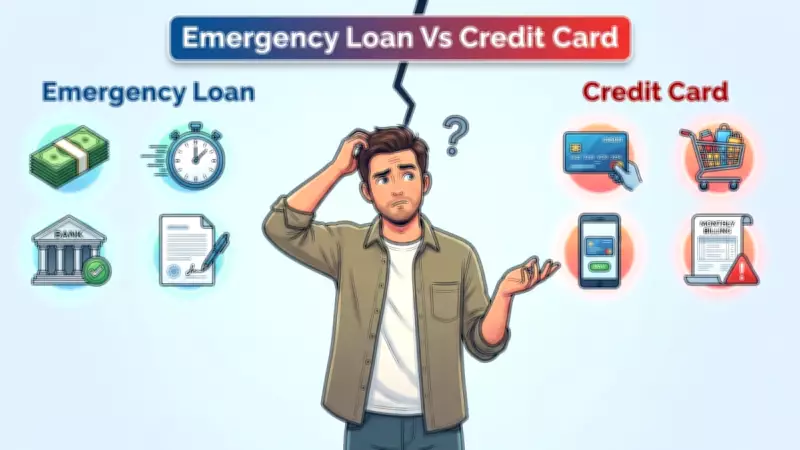
When facing an unexpected financial need, such as a medical bill or urgent home repair, many people turn to either an emergency loan or a credit card. Both options provide quick access to funds, but they differ significantly in cost, repayment structure, and long-term financial impact. Understanding these differences is crucial to making a prudent decision.
Interest Rates and Fees
Emergency loans, typically personal loans, often have fixed interest rates ranging from 10% to 15% Annual Percentage Rate (APR) for borrowers with good credit, according to financial data from Bankrate. In contrast, credit cards commonly have variable APRs that average around 20% and can exceed 25% for those with lower credit scores. Additionally, credit cards may charge balance transfer fees or cash advance fees—often 3% to 5% of the amount—which add to the cost. Emergency loans generally have lower origination fees, typically 1% to 6% of the loan amount.
Repayment Terms
Emergency loans offer fixed monthly payments over a set term, usually 12 to 60 months. This predictability helps borrowers budget effectively and ensures the debt is repaid by a specific date. Credit cards, on the other hand, require only minimum monthly payments, which can extend repayment for years if only minimums are paid, accruing substantial interest. For example, a $5,000 credit card balance at 20% APR with minimum payments could take over 15 years to pay off and cost nearly $5,000 in interest.

Speed and Accessibility
Credit cards provide immediate access to funds—as fast as a swipe or tap. Many cards offer 0% introductory APR periods on purchases or balance transfers, which can be a cost-effective bridge if repaid before the promotional period ends. Emergency loans typically take one to seven business days for approval and disbursement, though some online lenders offer same-day funding. However, loans may require a credit check and documentation, which can delay access for those with poor credit.
Impact on Credit Score
Both options affect credit scores. Taking an emergency loan adds a new installment account, which can boost credit mix and potentially improve scores if payments are made on time. Conversely, maxing out a credit card increases credit utilization ratio, a major scoring factor, which can lower scores. Late payments on either product harm credit, but credit card late fees can trigger penalty APRs as high as 29%.
When to Choose Each Option
Financial experts recommend choosing an emergency loan when you need a larger amount (over $5,000) and can afford fixed monthly payments over time. It is especially suitable for debt consolidation or planned expenses. A credit card is preferable for smaller, short-term needs that can be paid off within a billing cycle, or when you have a promo APR. However, if you carry a balance month-to-month, a loan is almost always cheaper.
Conclusion
Ultimately, the best choice depends on your specific situation—credit health, repayment ability, and urgency. For most borrowers, an emergency loan offers lower long-term cost and structured repayment, while a credit card provides convenience for small, immediate expenses. Compare offers, read the fine print, and choose the option that aligns with your financial plan.