

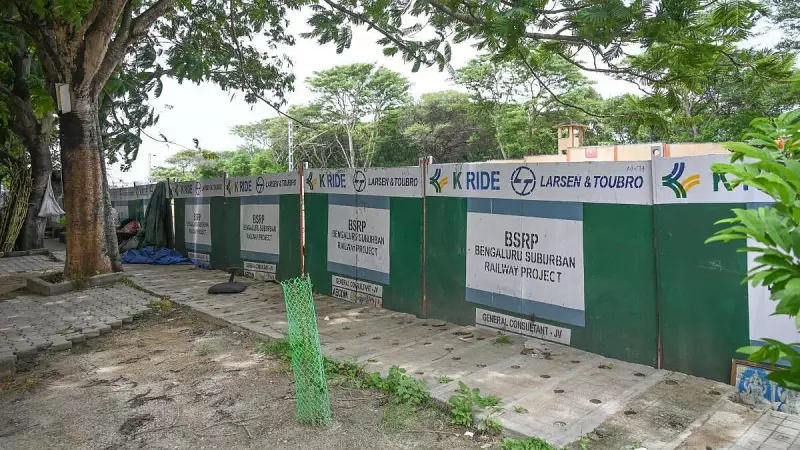
The long-awaited suburban rail network for Bengaluru has hit another significant hurdle, with its estimated cost skyrocketing by a staggering Rs 1,000 crore. This revelation came to light as the state cabinet approved the revised financial plan for the project, which continues to progress at a sluggish pace.
Cabinet Approves Revised Cost Estimate
Law and Parliamentary Affairs Minister HK Patil briefed reporters on 02 January 2026, confirming the Karnataka cabinet's decision to greenlight the updated project cost. The minister announced the approval but stopped short of providing a detailed breakdown of the specific elements contributing to the massive cost escalation of Rs 1,000 crore.
This lack of detailed disclosure has raised questions about the reasons behind the financial overrun. The project, envisioned to decongest India's tech capital by connecting its suburbs with the city center, has been plagued by delays and planning challenges since its inception.

A Project Moving at a Snail's Pace
While the financial commitment has ballooned, the physical progress on the ground has been painfully slow, described by many observers as crawling. The contrast between the zooming costs and the crawling construction work highlights the significant implementation challenges facing this critical infrastructure initiative.
The suburban rail corridor is considered essential for Bengaluru's future, aiming to provide a reliable and fast alternative to the city's notorious road traffic. However, the continual delays and now the substantial cost revision threaten to undermine public confidence and prolong the city's commute woes.
Implications for Bengaluru's Commuters and Exchequer
The revised cost places an additional fiscal burden on the state exchequer and implementing agencies. It also signals potential further delays as financial re-approvals and tender processes might need revisiting. For the millions of daily commuters in Bengaluru, this news translates into a longer wait for relief from traffic congestion.
Key questions now revolve around the new timeline for completion and the source of the additional funds. Stakeholders are calling for greater transparency regarding the cost components and a concrete action plan to accelerate the stalled work. The success of this project is pivotal for shaping Bengaluru's sustainable urban mobility and supporting its continued economic growth.
The cabinet's approval, while necessary, is now a starting point for renewed focus and accelerated execution. All eyes will be on the authorities to ensure that this revised investment finally translates into tangible progress on the ground for Bengaluru's beleaguered residents.






