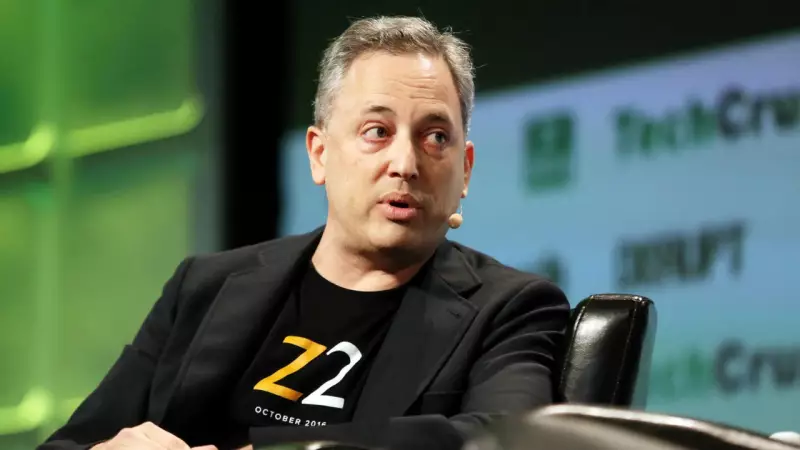
In a significant move highlighting the growing rift between Silicon Valley and its home state, prominent venture capitalist and former PayPal executive David Sacks has officially left California and established a new base in Texas. Sacks, who also serves as cryptocurrency advisor to former President Donald Trump, announced the relocation as a direct response to California's controversial proposed wealth tax.
The Exodus Trigger: California's Proposed Wealth Tax
The catalyst for Sacks' departure is a potential ballot measure in California that seeks to impose a 5% tax on the total wealth of its ultra-rich residents. If enacted, this tax would apply to anyone who is a California resident at the start of 2026. Criticising the move, Sacks framed his exit as a strategic decision, announcing the opening of his firm Craft Ventures' new office in Austin with a celebratory "God bless Texas and happy new year!"
A Warm Welcome from Texas' Tech Titans
The announcement was met with immediate and public welcomes from some of Texas' most powerful tech figures. Tesla and SpaceX CEO Elon Musk, himself a California transplant, was among the first to respond. "Welcome to Texas! No one will fight harder for the independent and free spirit of Texas than people who know it’s like when that’s taken away," Musk posted.

He was quickly joined by Michael Dell, founder of Dell Technologies, and Joe Lonsdale, co-founder of Palantir Technologies, both of whom echoed the welcome. Lonsdale's message, "We make our stand here," underscored the growing sentiment of Texas as a tech bastion.
The Debate: Sacks' Case for a Diversified Tech Ecosystem
The move sparked a pointed exchange about the future of tech hubs. Garry Tan, CEO of the San Francisco-based startup accelerator Y Combinator, commented that his firm hadn't opened an Austin office because data shows founders in the SF Bay Area create successful companies at a rate 2.5 times higher.
Sacks issued a detailed, four-point rebuttal, urging Tan and the broader venture capital community to reconsider. He argued that past data is a "rear view mirror" and that the Austin startup ecosystem is rapidly accelerating thanks to pioneers like Musk and Lonsdale. He called Y Combinator's stance a "self-fulfilling prophecy," stating that success would follow if major players supported Austin.
More broadly, Sacks warned of political repercussions. He contended that if the tech industry does not start "sharing the wealth with Red States," it should expect narrow and shrinking political support. "With the Left going socialist, the Right should be an ally; it still believes in innovation and property rights. But many on the Right wonder why they should support radical change that mainly enriches Team Blue," Sacks wrote. He concluded with a direct plea: "This goes for the rest of the VC ecosystem. I would urge you to open Austin offices in 2026."
The public departure of a figure like David Sacks signals a deepening divide, raising fundamental questions about taxation, political alignment, and the geographical future of America's innovation economy.