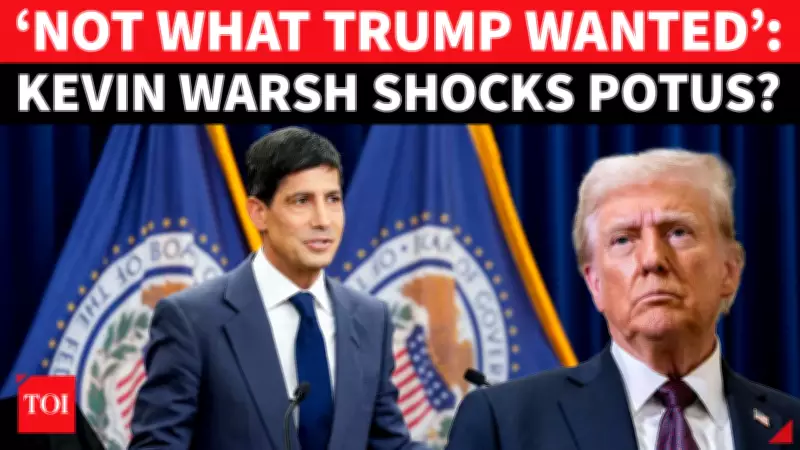
Donald Trump finally got the Federal Reserve chair he wanted—but Kevin Warsh's very first FOMC meeting delivered a surprise that stunned markets and fueled fresh debate. Despite repeated calls for lower borrowing costs, the Fed kept interest rates unchanged and signaled that higher rates could remain on the table. Did Warsh just pull off a Jerome Powell-style move in his debut?
Warsh's First FOMC Decision
In a move that caught many off guard, newly appointed Federal Reserve Chair Kevin Warsh presided over his first Federal Open Market Committee (FOMC) meeting by holding interest rates steady. The decision came despite persistent pressure from President Trump and some lawmakers to lower borrowing costs to stimulate the economy. Warsh's stance mirrored that of his predecessor, Jerome Powell, who often faced criticism from Trump for not cutting rates aggressively enough.
Market Reaction and Economic Projections
The announcement sent ripples through Wall Street, with investors closely parsing the Fed's updated economic projections. The central bank's dot plot indicated that policymakers expect rates to remain elevated for longer than previously anticipated, citing sticky inflation and a resilient labor market. This hawkish signal dampened hopes for imminent rate cuts and led to volatility in bond and equity markets.

Warsh's first press conference as Fed chair was closely watched. He emphasized the committee's commitment to data-dependent decision-making and downplayed external political pressures. "Our mandate is price stability and maximum employment, and we will use our tools accordingly," Warsh stated, echoing the nonpartisan tone that Powell often adopted.
Trump's Reaction and Political Implications
President Trump, who appointed Warsh with the expectation of a more accommodative monetary policy, expressed disappointment but stopped short of direct criticism. Sources close to the White House suggest Trump is wary of undermining his own appointee so early in his term. However, the decision reignites debates about the Fed's independence and the political dynamics of monetary policy.
Economists are divided on Warsh's move. Some applaud his adherence to traditional Fed orthodoxy, arguing that premature rate cuts could reignite inflation. Others warn that maintaining tight policy could slow economic growth ahead of the 2026 midterm elections. The coming months will test whether Warsh can navigate the delicate balance between political expectations and economic realities.
For now, Kevin Warsh has made a bold statement: his Fed will not be swayed by political pressure. Whether this stance will endure remains to be seen, but his first meeting has already cemented his reputation as a chair willing to defy expectations.