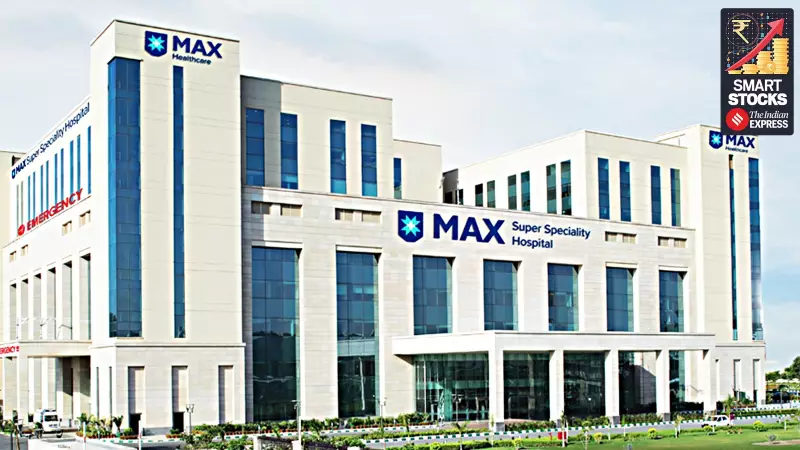
After a spectacular 811% rally over four and a half years, the share price of Max Healthcare Institute Ltd has hit a plateau in 2025. The high-flying stock, which became a market darling and secured a spot in the Nifty 50, is now facing investor scrutiny over its rich valuation of 74 times price-to-earnings (P/E) and recent dips in key profitability metrics. The central question for 2026 is whether this stagnation is a temporary pause or a sign of diminished upside potential.
The Meteoric Rise and the Sudden Plateau
Max Healthcare's journey from a cash-burning entity to one of India's most profitable hospital chains is a studied case of corporate turnaround. The stock witnessed two major growth cycles: from January 2021 to January 2022 and again from April 2023 to December 2024. However, calendar year 2025 told a different story, with the stock declining by 6% and entering a phase of stagnation, mirroring a broader slowdown in hospital stocks like Apollo and Global Health (Medanta).
This slowdown coincided with a significant capacity expansion by the company. In FY25, Max added over 30% capacity through a greenfield hospital in Delhi's Dwarka and the acquisition of Jaypee Hospital in Noida. While this boosted its bed count, it also pressured its financials. The company's celebrated Return on Capital Employed (ROCE) and EBITDA margins, which had peaked, began to fall, raising concerns among investors about the impact of aggressive expansion on profitability.

The Restructuring Engine: KKR and Abhay Soi's Playbook
The foundation of Max's stunning rally was laid in 2020 when global private equity giant KKR and restructuring expert Abhay Soi became co-promoters, with founder Analjit Singh exiting. At the time of the deal, Max's EBITDA margin was a modest 9.7%. Soi, who had successfully turned around BLK Hospital in Delhi, implemented a proven strategy: acquiring underperforming hospitals and radically improving their operational efficiency.
His focus on less-competitive, high-margin super-specialities like organ-specific oncology, bone marrow transplants, and medical tourism, combined with systemic overhauls, worked wonders. Max's EBITDA margin soared to 26.8% in FY25, surpassing even industry pioneer Apollo Hospitals. The mantra of brownfield acquisitions—buying existing hospitals—allowed for almost immediate EBITDA breakeven, a key point highlighted by Soi in earnings calls.
Valuation Conundrum and the Road Ahead for 2026
Today, Max Healthcare trades at a premium valuation of 74x P/E and a high EV/EBITDA multiple compared to its peers. This suggests that much of its future profitability growth is already priced into the stock, explaining the 2025 correction. The last time the stock stagnated, between its two growth cycles, its P/E ratio corrected sharply from 100x in October 2021 to the low-40s by March 2023.
Despite the near-term concerns, most brokerage firms remain bullish on Max's long-term compounding story, pinning their hopes on its ROC E-focused brownfield expansion. The company plans to double its capacity to 10,000 beds in the next five years, with 70% of the expansion being brownfield and focused on metros and top-tier urban clusters.
Analysts also cite positive industry tailwinds: a favorable payor and case mix (more oncology, cardiology), India's rise as a medical tourism hub, and supportive government policies like GST rate rationalization and increased CGHS rates for key procedures. Brokerages including UBS, Nuvama, and Axis Securities see a 20-31% upside from current levels, with price targets ranging from Rs 1,355 to Rs 1,550.

In conclusion, while Max Healthcare's ROC E-first approach and integrated model position it as a stable cash compounder for the long term, its premium valuation may cap short-term explosive gains. The stock is unlikely to replicate the 800% rally driven by its initial turnaround. Growth in 2026 and beyond will depend on the seamless integration of new capacity, sustained high margins, and the broader healthcare sector absorbing the industry-wide bed addition without triggering a profitability war.