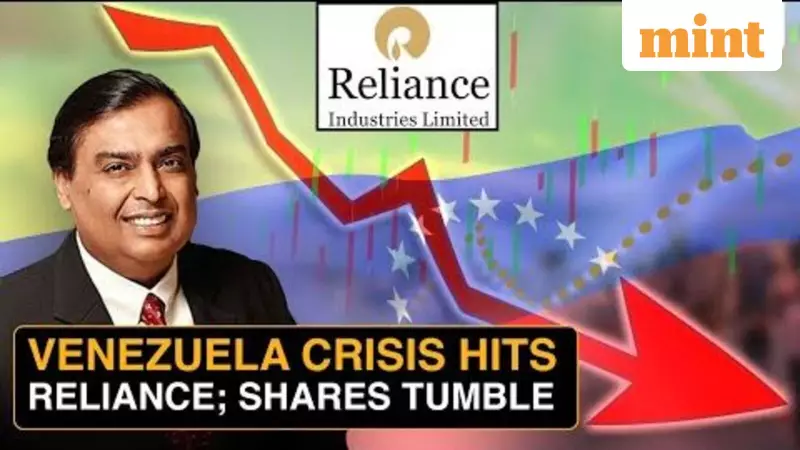
Shares of Reliance Industries Limited (RIL), India's most valuable company by market capitalization, witnessed a sharp and sudden decline in early trading on Tuesday, January 6. The stock price tumbled by almost 6% on the Bombay Stock Exchange (BSE), sending shockwaves through the market. This significant drop came just a day after the stock had closed nearly 1% lower, amplifying concerns among investors.
A Steep Morning Fall and Partial Recovery
The trading session began on a highly negative note for Reliance. The stock opened weak and quickly extended its losses, crashing by approximately 6% during the morning trade. This dramatic fall pulled the market heavyweight down by a similar percentage from its recent record high levels. Analysts pointed to aggressive profit-booking by investors in the current session as a primary driver behind the steep correction.
By the time reports were filed, the Reliance share price had managed to claw back some of its losses, staging a partial recovery from the day's lowest point. However, the damage was significant, highlighting the heightened volatility and sensitivity of the stock to external geopolitical factors.

The Venezuela Crisis: A Key Trigger for the Sell-Off
The immediate catalyst for the sharp decline in Reliance's share price was linked directly to the escalating economic and political crisis in Venezuela. Reliance Industries has substantial exposure to the South American nation through its oil and petrochemicals business. The company is both a major buyer of Venezuelan crude oil and has significant outstanding payments receivable from its state-owned oil company, PDVSA.
Any fresh escalation in sanctions or a deepening of the crisis in Venezuela poses a direct risk to Reliance's operations and financials. Investors, fearing potential asset impairments, payment defaults, or disruptions in crude supply, chose to exit their positions, leading to the massive sell-off. This event underscores how global geopolitical tensions can swiftly impact even the largest Indian corporations.
Investor Dilemma: Is This a Buying Opportunity?
The sharp correction has inevitably raised the crucial question for market participants: should investors consider buying Reliance shares after this steep fall? The 6% plunge from its peak presents a noticeably lower entry point compared to recent valuations.
However, financial experts advise caution. While the long-term growth story of Reliance Industries, encompassing its dominant refining business, booming Jio platforms, and expanding retail segment, remains intact, the Venezuela-related overhang is a genuine near-term risk. Potential investors are advised to closely monitor the developments in Venezuela and the company's official communications regarding its exposure.
The key factors to watch include:
- Resolution of payments from PDVSA.
- Clarity on future crude oil supply agreements.
- The broader impact of international sanctions on Reliance's operations.
- The overall market sentiment and technical support levels for the stock.
This episode serves as a stark reminder of the inherent risks in equity markets, where even blue-chip stocks are not immune to external shocks. For existing shareholders, the volatility may test conviction, while for new investors, it emphasizes the need for thorough research and a strong risk appetite when entering at such junctures.