

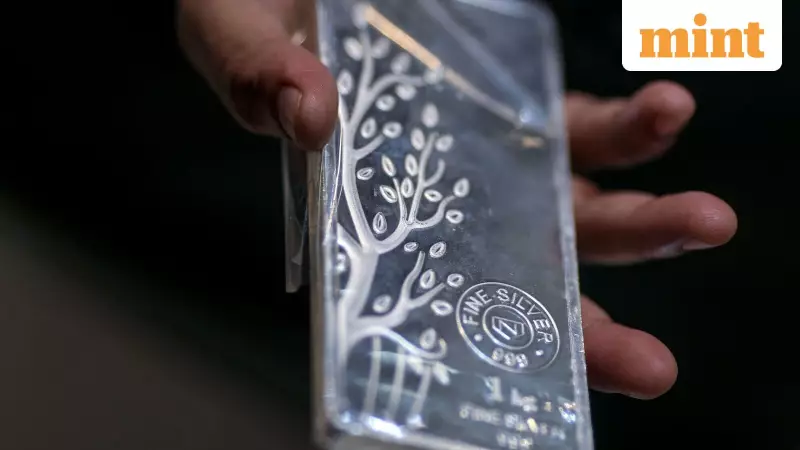
China has initiated a significant shift in the global silver market, imposing stringent export-licensing regulations that came into force on 1 January 2026. This move mandates government approval for an estimated 60-70% of the world's traded refined silver, echoing its previous controls on rare earth minerals and triggering strategic concerns for import-dependent nations like India.
China's Refining Dominance: The Core of the Control
The new rules, which also cover tungsten and antimony, are not rooted in China's mining prowess but in its overwhelming command over refining capacity. According to the London Bullion Market Association (LBMA), China hosts 27 accredited silver refineries, far surpassing Japan's 13 and leaving countries like Germany, Canada, India, and Switzerland—with just four each—far behind.
This concentration effectively makes China the gatekeeper of global refined silver supply. Its model is straightforward: import silver ore and base metal concentrates, refine them domestically, and export the finished product. As highlighted by The Silver Institute's World Silver Survey 2025, China has been a consistent net exporter, fueled by refined silver recovered from imported materials.

Chinese customs data starkly illustrates this trade imbalance. In October 2025, silver export values soared to approximately $887 million, dwarfing imports of only about $50 million for the same month, a pattern consistent over the past two years.
India's Vulnerable Position in the Silver Supply Chain
For India, the implications are tangible and immediate. Trade data for the period April to November 2025 reveals a critical dependency: Hong Kong and China together accounted for about 40% of India's total silver imports. During these eight months, India imported silver worth over $7 billion, while its exports were a mere $28 million.
The timing is particularly challenging as silver rapidly transitions from a traditional commodity to a critical mineral essential for modern technology. Its applications now span indispensable industries, including:
- Artificial Intelligence (AI) infrastructure and data centers.
- Solar power equipment and renewable energy systems.
- Consumer electronics and advanced medical devices.
- Defence systems and aerospace technology.
This broad utility means any disruption in silver supply can ripple across India's strategic manufacturing and green energy goals.
Strategic Implications and the Road Ahead
China's export licensing regime adds a powerful lever to its geopolitical influence over strategic supply chains. By controlling the flow of refined silver, it can potentially influence production timelines and costs for a wide array of high-tech products globally.
For India, this development underscores an urgent need to diversify import sources and bolster domestic refining capabilities. The nation's ambitions in electronics manufacturing, its massive solar energy push, and defence indigenization could face headwinds if silver supply becomes constrained or subject to geopolitical whims.
The move signals a world where trade in critical minerals is increasingly weaponized. As silver's role evolves, securing a stable and sovereign supply chain is no longer just an economic imperative but a strategic necessity for India's technological and energy security.






