

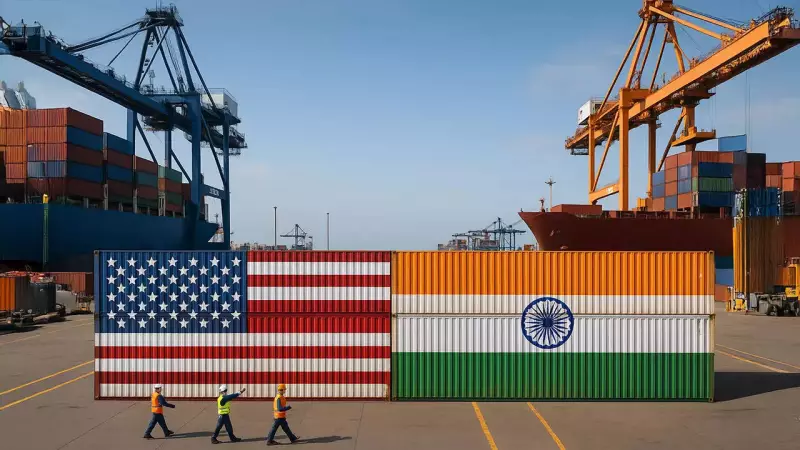
India has formally requested the United States to revoke the additional 25% tariffs imposed on its imports, a plea conveyed by the Indian Ambassador to a key US senator. The development highlights the ongoing trade friction between the two nations, centered on New Delhi's energy procurement from Russia.
Ambassador's Direct Appeal to US Senator
US Senator Lindsey Graham revealed on Sunday that Vinay Mohan Kwatra, the Indian Ambassador to the United States, hosted him last month. According to Graham, the ambassador's primary focus was to discuss India's decreased purchases of Russian crude oil. The ambassador explicitly asked the senator to relay a message to US President Donald Trump, seeking the removal of the extra duties.
"I was at the Indian Ambassador's house a month ago, and all he wanted to talk about was how India is buying less Russian oil," Graham told reporters while aboard Air Force One with President Trump. "And he asked me to tell the President to relieve the 25% tariff."

Root of the Tariff Dispute and Escalating Tensions
The additional 25% duties were levied by the Trump administration in August of last year. The US justified the move by alleging that India's acquisition of Russian oil was indirectly financing Moscow's military operations in Ukraine. With these tariffs in effect, the total duty on affected imports soared to 50%.
Senator Graham's remarks come at a time of renewed trade strain. President Trump has recently reiterated threats against India over its continued import of Russian energy. "PM Modi's a very good man. He's a good guy. He knew I was not happy. It was important to make me happy," Trump stated. "They do trade, and we can raise tariffs on them very quickly."
In contrast, India has defended its position firmly. The government emphasizes the critical need to secure domestic energy supplies at stable prices, framing its purchases from Russia as a matter of national economic security.
Broader Geopolitical and Trade Context
The issue gained further prominence following the recent US military strike in Venezuela, another major oil-producing nation. Venezuela possesses the world's largest proven oil reserves, estimated at over 303 billion barrels, accounting for roughly 17% of the global total. However, production has plummeted to about 1 million barrels per day due to international sanctions and chronic underinvestment, as reported by OPEC.
This tariff dispute unfolds against a backdrop of high-level diplomatic engagement. Back in December, President Trump and Prime Minister Narendra Modi held a telephonic conversation. The call coincided with a fresh round of negotiations between the two countries. Both leaders stressed the importance of maintaining positive momentum in bilateral trade, despite the unresolved tariff issues.
Notably, just days before that call, President Trump had threatened to impose new tariffs on Indian rice imports. This threat came after a US farmer representative at a White House roundtable expressed concerns about alleged dumping practices by India, China, and Thailand.






