

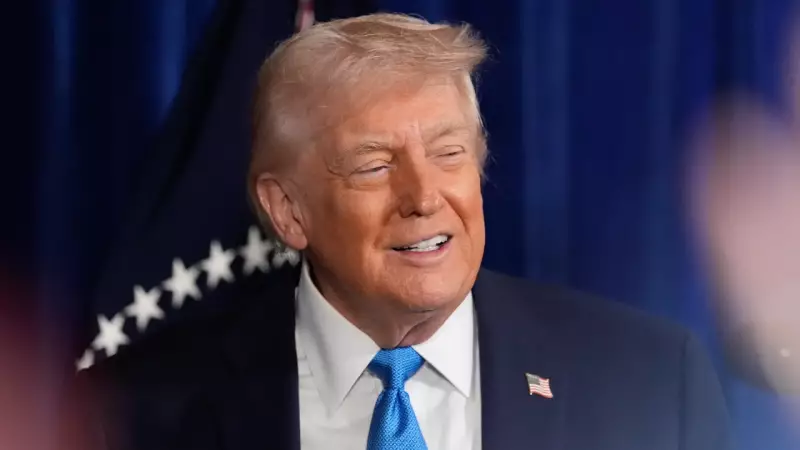
Former US President Donald Trump has publicly stated that India is actively working to "make him happy" by reducing its purchases of Russian oil, while simultaneously issuing a stark warning that failure to comply with his demands will lead to significantly higher tariffs being imposed "very quickly." The remarks, made aboard Air Force One, highlight the intense trade pressure Washington is applying on New Delhi as part of its strategy to choke off Moscow's war funding.
The Air Force One Remarks and Tariff Threats
During an interaction with reporters, Trump interjected while Senator Lindsey Graham was explaining the effectiveness of tariff threats. "They (India) wanted to make me happy…Modi is a good guy….he knew I was unhappy…and it was important to make me happy," Trump stated. This candid admission underscores the personal and political dimensions of the ongoing trade negotiations. Senator Graham, a key ally of Trump, backed the claim by revealing that during a visit to Indian Ambassador Vinay Kwatra's residence a month prior, "all he wanted to talk about was how India is buying less Russian oil."
Graham asserted that the ambassador had asked him to relay a request for the removal of the existing 25% tariff, leading Graham to conclude, "this stuff works… I really believe what he did with India is the chief reason why India is buying substantially less Russian oil." The current tariff structure on India involves a 25% base rate plus an additional 25% punitive levy specifically for purchasing Russian oil.

The 'Sledgehammer' Legislation: Sanctioning Russia Act of 2025
The context for these threats is the proposed Sanctioning Russia Act of 2025, a piece of legislation championed by Senator Graham. Designed as a powerful tool to force an end to the Russia-Ukraine conflict, the bill targets the economic lifelines of the Russian military. Introduced in April 2025, it serves as a legal shield for the executive branch, protecting it from court challenges against tariffs.
The bill's most potent provision authorizes the President to impose secondary tariffs of up to 500 percent on imported goods, granting "maximum flexibility" for negotiation. It includes a waiver, meaning the President has ultimate discretion on implementation, a power traditionally held by the legislature. Graham has explicitly identified China, India, and Brazil as primary targets, as they collectively buy around 70% of Russia's exported oil. He claims the bill now has 85 co-sponsors and could advance in the Senate.
India's Response and the Data on Oil Imports
In response to the pressure, India's actions show a notable shift. According to industry estimates, Russian oil imports in December 2025 fell to a three-year low of roughly 1.2 million barrels per day (bpd). This represents a steep 40% decline from the mid-2025 peaks, following a brief November spike. Projections suggest imports may drop below 1 million bpd in the coming months of 2026, a level not seen since the early days of the Ukraine war.
Simultaneously, the Indian government has taken direct steps to monitor the situation. Last week, it ordered all refiners to submit weekly disclosures of their oil purchases from both Russia and the United States. This data is ostensibly for use in the ongoing trade talks with the Trump administration. While Trump claims India is making him happy by tapering purchases, Washington seems intent on keeping the tariffs in place at least until an expected Supreme Court ruling this month on the legality of the current administration's tariff powers.
The Trump-Graham comments leave the status of the current tariffs unclear. Washington appears to be waiting to see if New Delhi meets a specific, undisclosed target for reduced Russian oil imports, even as India increases its energy purchases from the US. The political maneuvering sets the stage for a critical period in India-US trade relations, with significant economic consequences for both nations.






