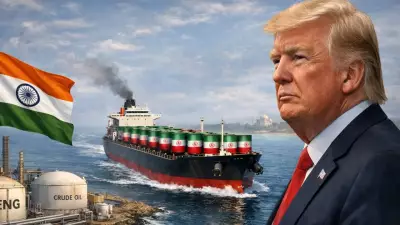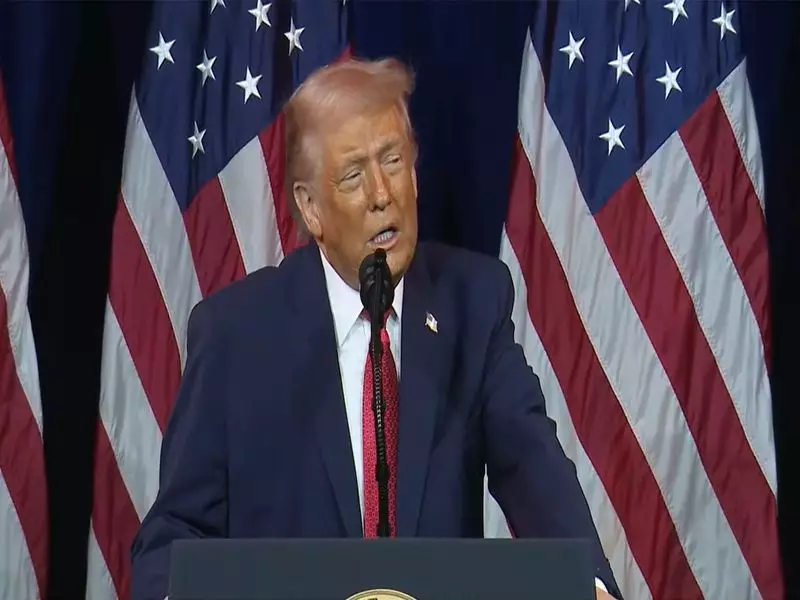
Former United States President Donald Trump has made a significant claim regarding India's energy purchases, stating that Prime Minister Narendra Modi is "not happy" with him. The reason cited is the imposition of high tariffs by the US on India for its continued procurement of Russian oil.
Trump's Revelation on Tariffs and Bilateral Tensions
During a recent interaction, Donald Trump highlighted a point of contention in the otherwise strengthening India-US strategic partnership. He asserted that the tariffs levied by his administration, and seemingly continued under President Joe Biden, have become a sore point. The core issue revolves around India's strategic decision to buy discounted Russian crude oil following the Ukraine conflict, a move that drew criticism from Western allies but was crucial for India's energy security and economic stability.
Trump framed this within the broader context of the US trade deficit with India, suggesting that the tariffs were a response to what he perceives as an imbalance. His comments shed light on the complex diplomatic and economic calculations that underpin global energy politics, where national interests often clash with alliance dynamics.

India's Pragmatic Energy Strategy and Global Pressures
India, as the world's third-largest oil importer, has consistently defended its right to secure the most affordable energy for its growing economy. The surge in Russian oil imports post-February 2022 was a purely economic decision, allowing the country to cushion its citizens from volatile global prices. However, this pragmatic approach put New Delhi in a delicate position with Washington, which has led a coalition to impose a price cap and reduce revenues for Russia's war effort.
The US has not imposed direct sanctions on countries buying Russian oil but has used tools like the G7 price cap mechanism and the threat of secondary sanctions to exert pressure. Trump's admission about the high tariffs reveals another layer of this pressure campaign, indicating that trade tools were potentially used to influence India's foreign policy choices.
Implications for Future India-US Trade Relations
This disclosure by the former President, who is a leading contender in the upcoming US presidential election, brings the topic of tariffs and energy trade back into focus. It raises questions about the future trajectory of bilateral trade talks. A key question is whether this issue will be a persistent friction point or if both nations can find a mutually acceptable framework that acknowledges India's energy needs while addressing US geopolitical concerns.
The situation underscores a critical challenge for Indian diplomacy: balancing its deep strategic convergence with the US on security issues with its independent economic and energy policies. The comments also highlight how individual leaders' perceptions and policies can significantly impact complex international relationships.
As global dynamics shift, India's approach continues to be guided by its national interest. The episode, as revealed by Trump, confirms that even between friendly nations, tough negotiations and disagreements on specific issues like trade deficits and energy imports are part of the diplomatic process. The resilience of the broader India-US partnership will be tested by how both sides manage these divergences while focusing on larger shared goals in the Indo-Pacific and beyond.