

US Tariff Reduction to 18% on Indian Goods Welcomed by Maharashtra Industry Bodies
The reduction of US tariffs on Indian goods to 18% under the India-US trade deal has been enthusiastically welcomed by industry bodies across Vidarbha and Maharashtra. Associations have described this development as timely relief that restores competitiveness in the world's largest consumer market and opens substantial export opportunities for the region.
Vidarbha Industries Association Highlights Competitive Edge
The Vidarbha Industries Association (VIA) stated that the agreement would provide Indian exporters with a significant edge over competitors such as China, Vietnam, Indonesia, and Bangladesh. VIA president Prashant Mohota emphasized that the deal is expected to have an immediate and high-volume impact on trade, particularly when compared to other global agreements.
He specifically noted that agriculture and textiles—key sectors for the Vidarbha region—stand to benefit substantially from improved access to the US market. According to VIA analysis, the agreement will encourage investment, strengthen MSMEs, and align with India's long-term goals of export promotion and deeper integration with global value chains.

CAMIT Terms Tariff Cut a Landmark Development
The Chamber of Associations of Maharashtra Industry & Trade (CAMIT) termed the tariff reduction a landmark development for Indian trade and manufacturing. CAMIT president Dr Dipen Agrawal explained that the revised tariff structure places Indian exporters among the most competitive emerging-market suppliers in the United States.
He identified several sectors likely to gain from improved price competitiveness and restored parity with regional peers, including textiles, apparel, chemicals, gems and jewellery, seafood, and engineered goods. CAMIT also highlighted broader macroeconomic benefits, including improved investor sentiment, export expansion, and stronger India-US economic cooperation.
Vidarbha-Specific Benefits and Sectoral Impact
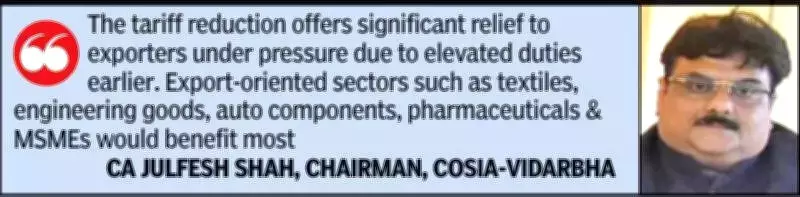
Adding a Vidarbha-centric perspective, COSIA Vidarbha chairman CA Julfesh Shah stated that the tariff reduction offers significant relief to exporters who have been under pressure due to elevated duties previously. He identified export-oriented sectors such as textiles, engineering goods, auto components, chemicals, pharmaceuticals, and MSMEs as those likely to benefit most substantially.
Shah emphasized that the tariff cut improves price competitiveness, supports the revival of export orders, and strengthens India's integration into US supply chains, creating sustainable opportunities for regional businesses.
Political Context and Implementation Considerations
Varun Vijaywargi, treasurer of the VED Council, provided additional context regarding the political dimensions of the tariff reduction. He noted that while US President Trump has announced the lowering of taxes on goods coming from India from 25% to 18%, this remains a unilateral US announcement without a formal joint agreement with India yet.
Vijaywargi highlighted that the reduction benefits Indian exporters of clothing, shoes, rugs, jewellery, bedsheets, and home goods. However, he cautioned that while stopping cheap Russian oil purchases would nullify the penalty tariff of 25%, this represents a challenging political decision that requires careful navigation.
The consensus among industry leaders is clear: this tariff reduction represents a significant opportunity for Maharashtra's export sectors to regain competitive footing in the crucial US market while supporting broader economic objectives.






