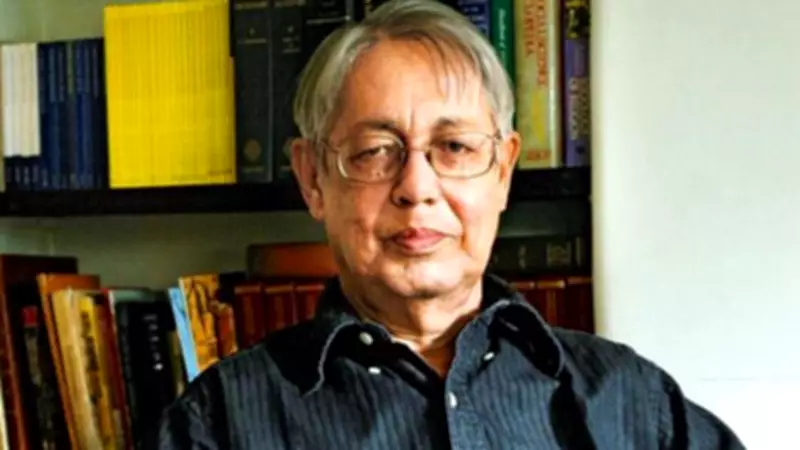
Remembering André Béteille: 5 Seminal Books That Redefined Caste and Class Studies in India
Renowned Indian sociologist, writer, and public intellectual André Béteille passed away at the age of 91 due to age-related illness at his residence in New Delhi on Tuesday, February 3, 2026. According to his family, Béteille had been unwell for some time and died peacefully at home. Over a distinguished career spanning more than six decades, Béteille combined rigorous empirical research with deep engagement with democratic institutions, education, and social justice, leaving an indelible mark on sociological thinking in India and beyond.
Caste, Class and Power (1965)
Caste, Class, and Power stands as a landmark village study that fundamentally transformed how India understands social hierarchy. Based on meticulous fieldwork in Sripuram, a Tanjore village, this groundbreaking work traces how caste, land ownership, and political authority once reinforced each other, and how these structures gradually came apart during India's post-independence transformation. Béteille documents with precision the erosion of Brahmin dominance, the rise of Non-Brahmin political power, and the uneven gains brought by democracy, education, and land reforms.
Attentive to both continuity and profound change, the book reveals a society in transition where social mobility coexists with stubborn, persistent inequality, particularly affecting Adi-Dravida communities. Rigorous in methodology, lucid in exposition, and enduringly relevant in its insights, Caste, Class and Power remains essential reading for anyone seeking to understand rural India's complex social dynamics and the mechanisms of social change.

Studies in Agrarian Social Structure (1974)
In this concise yet powerful volume, André Béteille cuts through romanticized notions of village life to reveal how land, labor, and production systems fundamentally shape social hierarchies in rural India. Challenging caste-only explanations of inequality, he traces the significant shift toward class-based inequalities and demonstrates how economic organization drives both social conflict and transformation.
Grounded in rich empirical insight yet boldly theoretical in its approach, Studies in Agrarian Social Structure redefined how agrarian societies should be studied and understood. Clear in its arguments, critical in its analysis, and compelling in its conclusions, this work remains an essential read for scholars and students interested in rural transformation, social stratification, and the complex dynamics of power in developing societies.
The Idea of Natural Inequality and Other Essays (1983)
The Idea of Natural Inequality and Other Essays represents a bold and penetrating collection in which André Béteille unpacks how inequality is justified, challenged, and experienced in modern societies. Grounded in contemporary Indian realities yet rich in comparative sociological insight, these essays explore caste, class, power, and privilege alongside competing ideas of equality.
Béteille interrogates the notion of "natural" inequality with remarkable clarity and intellectual rigor, exposing how social hierarchies are sustained through cultural norms, ideological frameworks, and institutional arrangements. Thoughtful in its approach, incisive in its critique, and deeply relevant to contemporary debates, this book bridges sociology, philosophy, and political thought, making it essential reading for anyone seeking to understand inequality not just as a social condition, but as a powerful idea that shapes everyday social life.
Equality and Universality: Essays in Social and Political Theory (2002)
Equality and Universality: Essays in Social and Political Theory presents a collection of incisive essays in which André Béteille examines the persistence of inequality within democratic societies. Focusing primarily on India while adopting a sophisticated comparative sociological perspective, the book explores class, caste, status, justice, and equality as interconnected social realities.

Béteille critically analyzes different forms of inequality and reflects thoughtfully on the moral and practical limits of egalitarian ideals. Rejecting simplistic solutions, he highlights the inherent tension between universal democratic principles and deeply rooted social differences. These essays combine empirical insight with theoretical clarity, making the book a significant contribution to contemporary social and political theory that continues to inform academic discourse and policy discussions.
Universities at the Crossroads (2010)
Universities at the Crossroads by André Béteille examines the changing role of universities in contemporary society, with primary focus on India set within a historical and comparative framework. The book analyzes the original objectives of universities and evaluates how far they have remained faithful to their academic and social missions in an era of rapid transformation.
Béteille views the university both as a center of learning and as a social institution, shaped profoundly by the dramatic expansion of higher education since the mid-twentieth century. He explores the causes and consequences of this growth with characteristic insight, highlighting the central challenge of promoting social inclusion while maintaining rigorous standards of teaching and research. This work provides essential perspective on the future of higher education in India and its role in addressing persistent social inequalities.
André Béteille's intellectual legacy continues through these five seminal works, which collectively represent a comprehensive framework for understanding the complex interplay of caste, class, and inequality in modern India. His rigorous methodology, theoretical sophistication, and commitment to empirical truth have inspired generations of sociologists and social scientists, ensuring his ideas will continue to shape academic discourse and public understanding for decades to come.