Supreme Court Halts Implementation of UGC's Controversial Equality Regulations
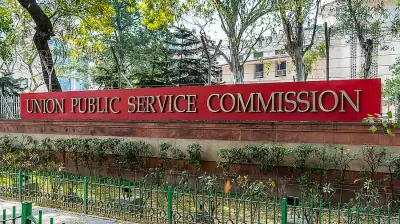
The Supreme Court of India has issued a significant stay order on Thursday, putting on hold the University Grants Commission's newly notified regulations aimed at promoting equality in higher education institutions. This decision comes amidst widespread nationwide protests and legal challenges against what many are calling exclusionary provisions within the legislation.
Legal Challenge and Court's Interim Order
A bench comprising Chief Justice Surya Kant and Justice Joymalya Bagchi heard multiple petitions challenging the UGC regulations that were officially notified on January 23, 2024. The court issued formal notices to both the Central Government and the University Grants Commission while granting an interim stay on the implementation of these controversial rules.
The petitioners argued that the regulations were fundamentally flawed, describing them as arbitrary, exclusionary, discriminatory, and in violation of constitutional principles as well as the University Grants Commission Act of 1956. At the heart of the controversy lies Regulation 3(C), which specifically defines caste-based discrimination in a manner that has sparked intense debate across educational institutions.

The Core Controversy: Definition of Caste Discrimination
The primary objection raised against the new UGC regulations centers on their narrow definition of caste-based discrimination. The regulations strictly limit recognition of caste discrimination to incidents involving members of Scheduled Castes (SC), Scheduled Tribes (ST), and Other Backward Classes (OBC).
Critics argue that this restrictive definition effectively denies institutional protection and grievance redressal mechanisms to individuals belonging to the general or non-reserved categories who might also face harassment based on their caste identity. This perceived exclusion has become the flashpoint for protests across university campuses nationwide.
Supreme Court's Observations and Reasoning
The apex court expressed serious concerns about the language and implementation of the contested regulations. Justice Surya Kant specifically noted that "there is complete vagueness in Regulation 3(C) which defines caste-based discrimination, and it can be misused."
In its interim order, the court clarified its position: "We are simply examining it on the threshold of constitutionality and legality." The bench further emphasized that "the language needs to be re-modified" to ensure proper implementation.
Importantly, the court stated: "We are not concerned about general category complaints. Our concern is that the redressal system for reserved community members should remain in force." This nuanced position acknowledges the need for protection mechanisms while recognizing the regulatory shortcomings.
The court articulated its broader vision for educational institutions, stating: "We want free, equitable and inclusive atmosphere in educational institutions. Unity of India must be reflected in our educational institutions." For the interim period, the 2012 UGC regulations will continue to apply until further judicial review.
Nationwide Protests and Political Reactions
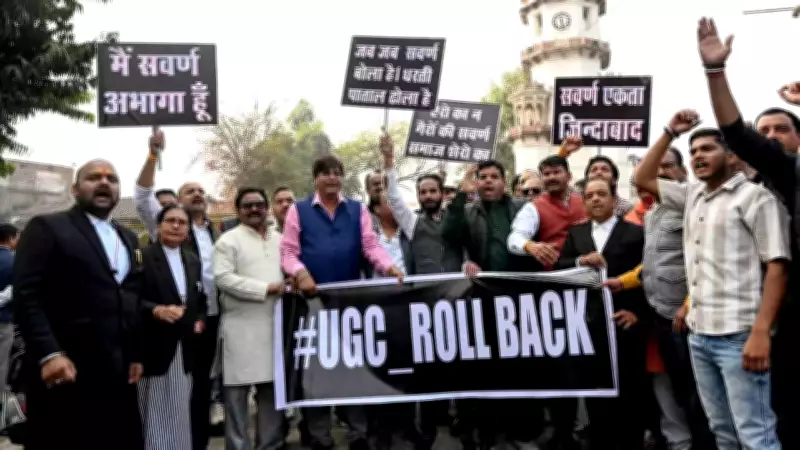
The court's decision follows significant student demonstrations across the country. On Wednesday, just before the Supreme Court hearing, students predominantly from general categories staged protests at Delhi University's North Campus demanding immediate withdrawal of the newly notified UGC equity rules.
Protesting students argued that instead of promoting equality, the rules would institutionalize discrimination on campuses. They highlighted the absence of binding provisions for the representation of general category students as a major flaw in the regulatory framework.
The controversy has also spilled into political circles. Shyam Sundar Tripathi, Vice President of the BJP Kisan Morcha from the Salon constituency in Rae Bareli, resigned from his position citing dissatisfaction with the new UGC policies. In his resignation letter addressed to Prime Minister Narendra Modi, Tripathi described the regulations as "a black law like the reservation bill brought against the children of the upper caste."

His letter further stated: "This law is extremely dangerous for society and also divisive. I am completely dissatisfied with the bill. There is great resentment. I do not support this reservation bill. Supporting such an unethical bill is completely against my self-respect and ideology."
Broader Implications for Higher Education
The Supreme Court's intervention marks a critical juncture in India's ongoing conversation about equality, representation, and discrimination in higher education. The stay order provides temporary relief while the legal and constitutional validity of the regulations undergoes thorough judicial scrutiny.
Educational institutions across the country now await further clarity on how equality mechanisms should be structured to serve all students without creating new forms of exclusion. The court's emphasis on creating "free, equitable and inclusive atmosphere" while maintaining "unity of India" in educational spaces sets important parameters for future policy formulation.
As the legal process continues, stakeholders from all sides of the debate will be closely watching how the Supreme Court balances the need for protective mechanisms for historically marginalized communities with concerns about creating comprehensive equality frameworks that serve all students regardless of their caste background.