In a significant parliamentary development, the Indian government on Monday introduced a landmark bill aimed at overhauling the regulatory framework for higher education, only to subsequently agree to send it for deeper scrutiny following strong objections from opposition members.
Bill Introduced Amidst Parliamentary Din
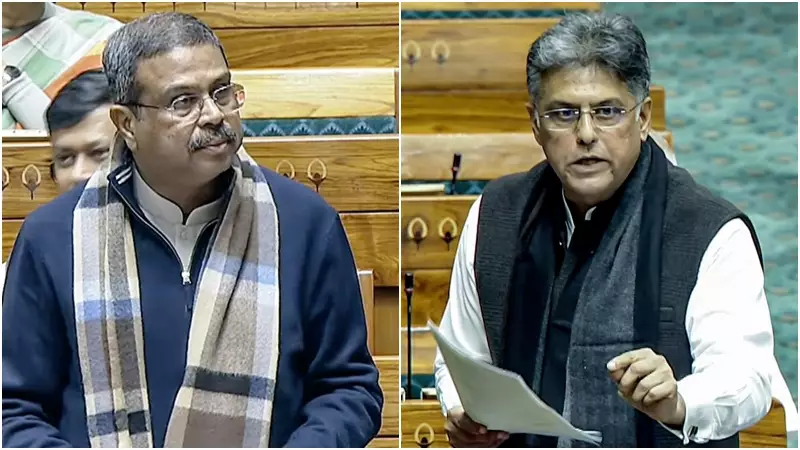
Union Higher Education Minister Dharmendra Pradhan presented the Viksit Bharat Shiksha Adhishthan Bill, 2025, in the Lok Sabha. The introduction occurred against a backdrop of commotion related to a separate political issue concerning alleged slogans at a Congress rally.
The proposed legislation seeks to establish a single, overarching Higher Education Commission for India. This new body would be supported by three distinct councils focused on regulation, accreditation, and the maintenance of academic standards across universities and higher education institutions.

Opposition Forces Referral to Joint Committee
Facing immediate criticism from several opposition MPs, the government, through then Union Parliamentary Affairs Minister Kiren Rijiju, conceded to refer the Bill to a Joint Committee of Parliament. Rijiju stated that the move came in response to requests from members who argued the extensive Bill required more detailed deliberation.
The opposition's concerns were multi-faceted. Congress MP Manish Tewari led the charge, contending that the legislation results in an "excessive centralisation of higher education" and violates the constitutional distribution of legislative powers. He also argued it suffers from excessive delegation of legislative authority.
Key Provisions and Contentious Points
The Bill proposes a commission headed by a chairperson appointed by the President of India. Its reach would be vast, covering all central universities and their colleges, as well as institutes of national importance like the IITs, NITs, IISc, IISERs, IIMs, and IIITs. Notably, IITs and IIMs are currently not under the purview of the University Grants Commission (UGC).
While the Bill tasks the new body with developing a policy to prevent the commercialisation of higher education, it does not grant it the power to regulate fees. It does, however, empower the regulatory council to impose significant financial penalties on institutions for violations. Penalties range from not less than Rs 10 lakh to a maximum of Rs 2 crore, with the highest penalty reserved for institutions established without necessary central or state approval.
A unique point of contention was the very name of the Bill. MPs including N K Premachandran (RSP), T M Selvaganapathy (DMK), and S Jothimani (Congress) objected that the Hindi nomenclature "Viksit Bharat Shiksha Adhishthan" violates Article 348 (1) (B) of the Constitution, which states that the text of all Bills should be in English. Premachandran expressed difficulty in pronouncing the name, while Jothimani accused the government of "imposing Hindi" and attacking the federal structure.
Logistical issues were also raised. TMC MP Saugata Roy criticised the Parliamentary Affairs Ministry's "ineptness", noting that copies of the Bill were received late the previous night and the supplementary list of business was circulated only at 1 pm on the day of introduction.
The Bill's journey to becoming law is now on pause, pending the detailed examination and report of the Joint Committee of Parliament, where the heated debates over centralisation, federalism, and language are expected to continue.