CBSE Class 10 German Exam 2026: A Comprehensive Analysis of the Balanced Paper
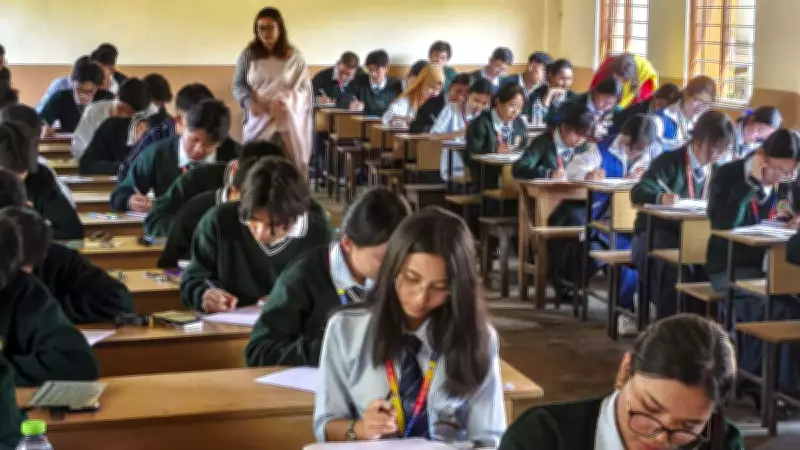
The Central Board of Secondary Education (CBSE) successfully conducted the Class 10 German language examination for the academic year 2025-26 on March 11, 2026. Initial feedback from students and educators indicates that the paper was well-received, characterized by a balanced structure and moderate difficulty level, ensuring a fair assessment of students' proficiency in the language.
Paper Structure and Section-Wise Breakdown
The German exam followed the prescribed CBSE format, divided into multiple sections designed to test various language skills. According to reviews, the paper was meticulously crafted to cover all aspects of the syllabus without overwhelming students.
- Reading Section: This part included comprehension passages that were straightforward and based on familiar topics, allowing students to grasp the context easily. Questions focused on inference and vocabulary, promoting critical thinking.
- Writing Section: Students were tasked with composing short essays, letters, and dialogues. The topics were practical and aligned with everyday scenarios, enabling learners to express themselves effectively in German.
- Grammar and Vocabulary: This section tested fundamental grammar rules and word usage through fill-in-the-blanks and sentence correction exercises. It was reported to be fair, with no tricky or out-of-syllabus questions.
- Listening and Speaking Skills: Although the analysis primarily covers the written exam, it's noted that the overall assessment emphasizes holistic language development, consistent with CBSE's focus on communicative competence.
Expert and Student Feedback on the Exam
Educators and students have praised the CBSE for designing a paper that was both challenging and accessible. Many described it as "well-structured" and "balanced," with a clear distribution of marks across sections. The difficulty level was deemed moderate, making it manageable for average students while still offering opportunities for high achievers to excel.

Teachers highlighted that the paper adhered closely to the NCERT textbook and sample papers, reducing anxiety among examinees. Students reported feeling confident post-exam, citing the absence of surprises and the logical flow of questions. This positive response suggests that the CBSE has effectively aligned its assessment methods with learning objectives, fostering a supportive examination environment.
Implications for Future Preparation and Curriculum
The 2026 German paper analysis underscores the importance of thorough syllabus coverage and regular practice. For upcoming batches, experts recommend focusing on:
- Consistent Revision: Regularly reviewing grammar rules and vocabulary to build a strong foundation.
- Practice with Past Papers: Solving previous years' question papers to familiarize with the exam pattern and time management.
- Interactive Learning: Engaging in conversations and writing exercises to enhance practical language skills.
This balanced approach in paper setting reflects CBSE's commitment to promoting language education that is both rigorous and student-friendly, encouraging more learners to take up German as a second language option.