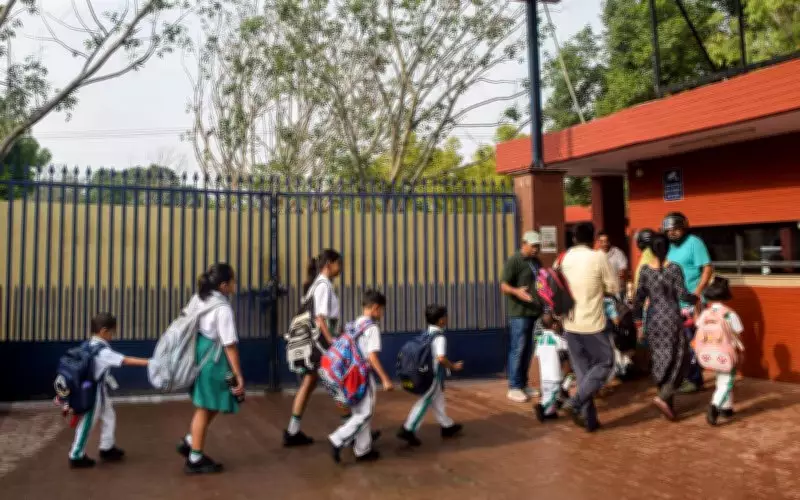
School Safety Drive Reveals Widespread Deficiencies in Delhi
A comprehensive school safety inspection launched under Delhi's 'Child Protection Month' has uncovered deficiencies in 774 of the 1,677 schools examined so far, according to official data. The drive, which began on July 13, targets all 5,633 schools in the capital, including government, private, and aided institutions.
Lt. Governor Taranjit Singh Sandhu and Chief Minister Rekha Gupta ordered the inspections during a review meeting on July 6, emphasizing strict and time-bound implementation of child safety measures. The inspections are being conducted using a Student Safety Checklist aligned with guidelines from the National Commission for Protection of Child Rights (NCPCR), the Delhi Commission for Protection of Child Rights (DCPCR), and the Protection of Children from Sexual Offences (POCSO) Act.
Private Schools Account for Majority of Violations
Among the inspected schools, private institutions constitute the largest share of non-compliant facilities. Out of 812 private schools checked, 463 (57%) were found with deficiencies. In comparison, 270 out of 790 government schools (34%) and 41 out of 75 government-aided schools (55%) were flagged. Overall, the inspection teams have visited 1,677 schools across Delhi in two weeks.

Officials said the teams comprise representatives from parents, the Directorate of Education, the Women and Child Development Department, Delhi Police, and school heads. Schools found lacking are being directed to take immediate corrective actions, with follow-up inspections scheduled to ensure compliance.
Inspection Process and Scope
The inspection drive operates at a large scale, with teams covering between 150 and 200 schools per day. Authorities aim to complete assessments for all 5,633 schools in Delhi, including those under the Municipal Corporation of Delhi (MCD), New Delhi Municipal Council (NDMC), Delhi Cantonment Board, and private managements.
A senior education department official stated, "The objective is to institutionalise child safety measures as a permanent feature of school functioning, rather than limiting them to 'Child Protection Month.' We want to build a sustained culture of safety, accountability, and preparedness across educational institutions."
Plans for Follow-Up and Long-Term Safety Culture
Following the initial inspections, authorities will conduct follow-up visits to verify that deficiencies have been rectified. The checklist covers infrastructure, staff background checks, awareness of POCSO provisions, and emergency response protocols. The drive also emphasizes regular training for teachers and students on child safety.
Delhi's 'Child Protection Month' is a broader initiative to enhance child welfare, and the school safety inspection is a key component. Officials stressed that the effort is not a one-time exercise but a step toward embedding safety into daily school operations.