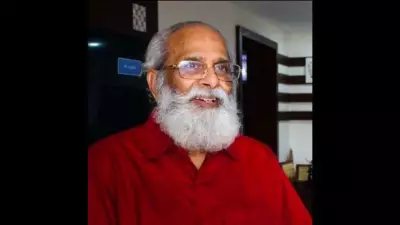
Rajya Sabha MP V.V. Prasad on Friday urged the government to revamp the entire examination system in the country to prevent recurring paper leaks. Speaking during a debate in the Upper House, Prasad emphasised that the current system is deeply flawed and requires urgent reforms to restore public confidence.
Proposed Reforms Include Digital Delivery and Biometric Verification
Prasad suggested implementing digital delivery of question papers to physical centres, coupled with biometric verification of all personnel handling the documents. He proposed that question papers be encrypted and transmitted directly to printing units under multi-layered security. 'The integrity of our exams is at stake. We need to act now,' Prasad said in a statement.
The MP also called for setting up a centralised monitoring agency to oversee all high-stakes examinations, including those conducted by the Union Public Service Commission (UPSC), the Staff Selection Commission (SSC), and various state boards. He argued that fragmented administration has allowed loopholes to persist.

Rising Cases of Paper Leaks Damage Credibility
Recent years have seen a surge in paper leak incidents, with major examinations such as the NEET-UG and UGC-NET being cancelled after leaks came to light. According to data cited by Prasad, over 50 exam-related irregularities were reported in the last five years, affecting millions of students. 'Each leak robs honest students of their future,' he said, urging the government to treat such crimes as economic offences under strict legal provisions.
Prasad also recommended the use of blockchain technology to ensure tamper-proof question paper storage and distribution. He noted that similar systems have been successfully adopted in countries like Finland and Singapore, where examination security is considerably higher.
Strengthen Legal Framework and Punitive Measures
To deter future leaks, Prasad demanded a review of the current legal framework. He advocated for harsher penalties, including life imprisonment for those found guilty of leaking papers or operating organised crime rings behind such scams. 'Current punishments are too lenient and do not act as a deterrent,' he argued. The MP also suggested fast-track courts to handle exam fraud cases.
He further proposed the creation of a national helpline and online portal for whistleblowers to anonymously report suspicious activities. This, he said, would encourage insiders to come forward without fear of reprisal.
Political Support and Next Steps
Several MPs from both ruling and opposition parties supported Prasad's suggestions, calling for a bipartisan approach to reform the examination ecosystem. The Ministry of Education is expected to submit a detailed action plan within three months, as per an assurance given by the Minister of State for Education during the debate.
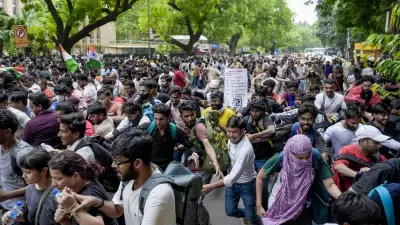
Experts have welcomed the proposals, with former UPSC chairman D.P. Agrawal stating, 'The MP’s recommendations align with many long-pending reforms. We hope the government moves swiftly to implement them.' Meanwhile, student unions have planned a rally in New Delhi next week to demand immediate action.