NEET UG 2026 Registration Commences with Enhanced Security Measures
The National Testing Agency (NTA) has officially opened registrations for the NEET (UG) 2026 examination, marking a significant shift toward a more secure and technologically advanced application process. This year's registration framework introduces several critical changes designed to strengthen verification protocols, minimize systemic vulnerabilities, and ensure the examination's integrity remains uncompromised.
Aadhaar-Based eKYC Takes Center Stage for Identity Authentication
The most transformative update for NEET 2026 is the mandatory implementation of Aadhaar-based eKYC during the application phase. For the first time in the history of this medical entrance examination, candidates will undergo electronic identity verification directly through the Aadhaar system. This initiative is strategically aimed at sanitizing the examination process by authenticating each applicant against a government-verified digital identity.
The primary objective is to decisively eliminate long-standing issues of impersonation and duplicate applications that have historically plagued large-scale competitive tests. Aspiring medical students must now ensure their Aadhaar details are meticulously accurate and readily accessible before initiating the registration process to avoid any procedural delays or rejections.

Live Photograph Capture Eliminates Upload Shortcuts
Another pivotal change involves the mandatory live photograph capture requirement during online form submission. Candidates will no longer be permitted to upload pre-existing photographs from their devices or studios. Instead, the system will directly capture a real-time image during the application process.
This live-captured photograph will be automatically cross-referenced and matched with the candidate's Aadhaar database photograph. In instances where the system detects a discrepancy, the applicant will be required to upload valid supporting documentation justifying the change. The NTA's message is unequivocal: blurred images, outdated photos, and casual uploads will no longer be tolerated in the pursuit of examination transparency.
Smarter Allocation of Examination City and Language
The selection process for examination cities and preferred languages has been substantially streamlined for NEET UG 2026. Allocation will now be strictly aligned with the candidate's current and permanent residential addresses as documented in the application form. This procedural refinement is expected to reduce arbitrary city selections, mitigate logistical mismatches, and ensure a more equitable regional distribution of candidates across various examination centers and language mediums.
Consequently, the accuracy of address details provided by aspirants has never been more crucial, directly influencing their examination center assignment and overall convenience.
Examination Pattern Unchanged but Verification Intensified
While the core examination pattern, duration, and syllabus for NEET UG 2026 remain consistent with previous years, the application process heralds a new era of rigorous verification. The NTA is clearly embracing advanced technological trends in real-time authentication, aligning with broader governmental initiatives to foster transparency in national-level competitive examinations.
These enhanced checks, though potentially adding steps to the application journey, are fundamentally intended to protect genuine candidates and uphold the principle that success should be determined solely by academic merit.
Application Portal and Support Channels
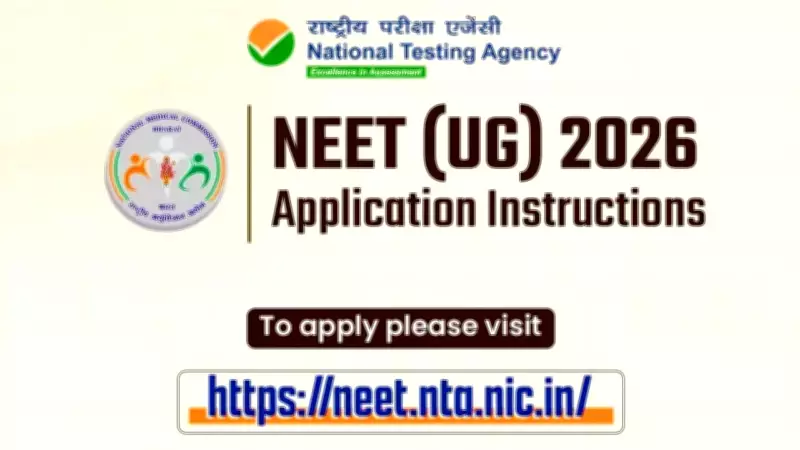
All applications must be submitted exclusively through the official NTA website at neet.nta.nic.in. For assistance or queries, candidates can contact the agency via email at neetug2026@nta.ac.in or through the designated helpline numbers. The timeless advice for aspirants remains: thoroughly read all instructions, patiently fill in every detail with precision, and avoid the common pitfall of last-minute submissions. In the high-stakes environment of NEET preparation, meticulous attention to the registration process is as vital as academic readiness.