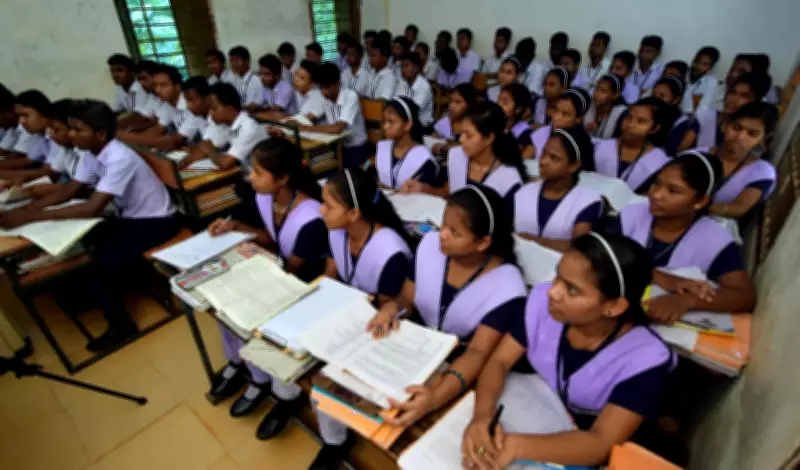
Odisha Economic Survey Highlights Education as Major Household Priority
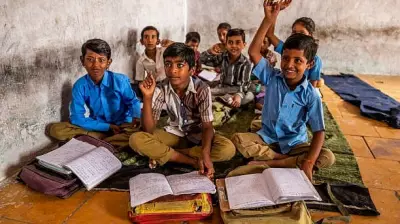
The Odisha Economic Survey for the fiscal year 2025-26, presented in the state assembly on Thursday, has identified education as one of the most significant components of household consumption across the state. This substantial financial commitment from families has played a crucial role in boosting student enrollment at both school and higher education levels, while simultaneously driving improvements in academic infrastructure.
Healthcare Leads, Education Follows Closely in Spending Patterns
According to the detailed report, healthcare remains the largest category of household expenditure, accounting for 67% of spending. However, education secured a strong second position at 9.3%, underscoring its importance in family budgets. The survey specifically noted that household consumption in the education sector was highest in districts including Khurda, Sundargarh, Cuttack, Balasore, Mayurbhanj, Sambalpur, Balangir, Keonjhar, Bargarh, and Puri.
State Investment in School Education Sees Dramatic Increase
The Odisha government has demonstrated a clear prioritization of strengthening the school education system. State spending in this critical area surged from Rs 22,527 crore in 2023-24 to Rs 31,185 crore in the 2025-26 budget estimate, marking an impressive 38.4% increase over just two years. This financial injection has yielded tangible results in school infrastructure.

Government schools have achieved near saturation in access to essential amenities such as drinking water, libraries, toilet facilities, and electricity connections. Furthermore, computer facilities in these schools expanded by 29% in 2024-25 compared to the previous year, with 84% of schools now equipped with internet connectivity.
Enrollment Gains and Dropout Reduction Mark Progress
At the secondary education level, covering classes 9 and 10, Odisha has achieved a gross enrollment ratio (GER) of 72.3% for the 2024-25 academic year. This figure surpasses the national average of 68.5% by a notable 5.5 percentage points. Concurrently, the dropout rate at this level has shown improvement, declining from 10.3% in 2023-24 to 9.8% in 2024-25.
Challenges and Progress in Tribal and SC Education
The report also addresses ongoing concerns regarding the education of tribal (ST) and Scheduled Caste (SC) communities, despite some enrollment achievements. Data indicates that between 2023-24 and 2024-25, enrollment for SC and ST students in the foundational stage (pre-primary to Class 2) remained critically low, with GER hovering around 35% for both groups.
However, participation improved significantly at the preparatory (classes 3 to 5) and middle (classes 6 to 8) stages, where GER reached 100%. Although GER dropped notably at the secondary level during this period, the survey highlighted an encouraging upward trend in the past year, particularly among ST students.
Higher Education Sees Strong Enrollment, Including Marginalized Groups
In the 2024-25 academic year, over two lakh students enrolled in colleges under the state's higher education department. Of these, nearly 70,000 belonged to ST and SC communities, representing 34.3% of the total enrollment—a positive indicator of inclusive growth in higher education access.
Vision 2047: Odisha Aims to Become a Regional Education Hub
Looking ahead, Odisha has set an ambitious goal to transform into a regional education hub by 2047. As part of this long-term strategy, the state plans to establish two dedicated 'edu-cities' in Sambalpur and Bhubaneswar, aiming to centralize and enhance educational excellence and innovation.