UP Board Class 10 English Exam 2025: A Comprehensive Last-Minute Guide
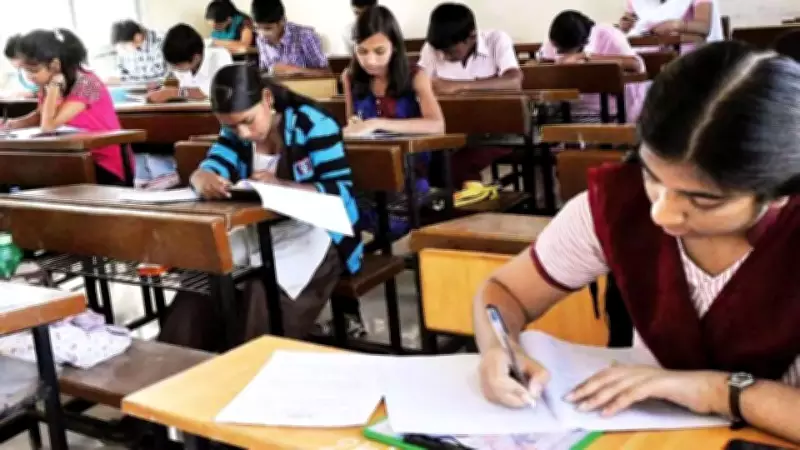
As the UP Board Class 10 English examination approaches on February 23, students across Uttar Pradesh are experiencing a familiar blend of pressure and urgency. At this critical juncture, the most effective approach is to avoid panic and refrain from starting new study material. Instead, the focus should be on consolidating and strengthening the knowledge already acquired through diligent preparation.
Leverage Official Resources: Sample and Previous Year Papers
Students are strongly advised to make full use of the official sample question paper and previous years' question papers during their final revision phase. These resources are invaluable for understanding the exact exam pattern, marking scheme, and the difficulty level of questions typically asked in the UP Board Class 10 English examination. Practicing with these papers not only enhances time management skills but also improves answer presentation techniques.
It is recommended that students solve at least one full paper under timed conditions before the exam. This exercise helps build confidence and identifies specific areas that require quick revision, ensuring a more targeted and efficient study approach in the days leading up to February 23.

Structured Book-Wise Preparation Strategy
For students appearing in the UP Board Class 10 English exam this year, following a structured revision plan is essential. The preparation should be divided according to the prescribed textbooks to ensure comprehensive coverage.
Book 1: First Flight
The main reader, First Flight, carries significant weight in both multiple-choice questions and descriptive answers. Key chapters such as A Letter to God, Nelson Mandela, Glimpses of India, Amanda!, Bholi, and The Trees are directly reflected in the sample paper pattern. Students should focus on revising the central themes of each chapter, character traits of important figures like Lencho, Mandela, Valli, and Buddha, as well as key incidents and turning points.
For poetry sections, examiners typically test themes, tones, and messages rather than deep literary analysis. Students must be able to articulate the central idea of each poem clearly and concisely in 40–50 words. Memorizing a few lines from each poem can also prove beneficial for optional questions that require writing excerpts from prescribed poems.
Book 2: Footprints Without Feet
The supplementary reader, Footprints Without Feet, is equally important. Stories such as The Necklace, The Midnight Visitor, The Making of a Scientist, and Footprints Without Feet are frequently used for short and long answer questions. While revising this book, students should focus on understanding the main characters' personalities, grasping the moral or message of each story, and preparing 60-word answers in advance for important themes. A clear understanding of the narrative sequence is crucial, as questions are often analytical but require simple language responses.
Section-Wise Exam Strategy for Optimal Performance
After thorough book revision, students should tailor their preparation to each section of the question paper to maximize scoring potential.
Part A: Multiple-Choice Questions
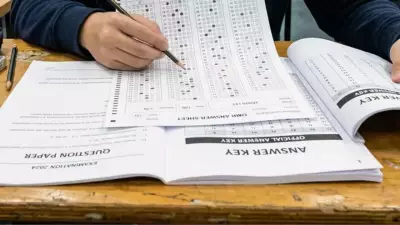
The first section, worth 20 marks, consists of objective OMR-based questions. These include unseen passages, grammar questions, spelling errors, sentence rearrangement, and literature-based factual queries. Accuracy is paramount here, as there is no scope for overwriting on OMR sheets. Students should read every option carefully before marking, avoiding haste. Literature-based MCQs are often direct and rooted in textbook facts, making thorough revision essential.
Reading Section: Precision and Conciseness
In the descriptive reading section, answers must be short and exact. Instead of copying entire passages, students should identify key lines and frame responses in their own simple words, adhering strictly to the allotted marks. Effective time management is critical, as excessive time spent on reading passages can compromise performance in other sections.

Writing Section: Format and Clarity
The writing section, which includes letter writing, applications, paragraphs, and articles, offers significant scoring opportunities. The sample paper features options like writing to a friend, a librarian, or composing paragraphs and articles. Adhering to correct formats is crucial, as format marks contribute substantially to overall scores. Students should use simple, clear language to ensure ideas are easily understood, avoid complex vocabulary, and follow word count instructions meticulously. Answers should be neat, well-structured, and divided into clear paragraphs, with a focus on clarity and correct expression.
Grammar: A High-Scoring Opportunity
Grammar questions in the sample paper cover direct and indirect speech, active and passive voice, punctuation, and translation from Hindi to English. These areas are highly scoring if practiced regularly. Students should revise basic rules and solve sample exercises daily. For translation tasks, using simple, correct sentence formation is key to securing marks.
Literature Answers: Structure and Relevance
For 30–40 word answers in literature, students should write three to four sentences that directly address the question, mentioning character names, chapters, or poems as required to demonstrate understanding. Avoid repeating the question or providing unnecessary information. For 60-word answers, start with an introduction related to the question, describe the central idea or incident logically using simple language, and conclude with a summarizing sentence. Lengthy, irrelevant explanations should be avoided to maintain clarity and save time.
Final Days Before the Exam: Focused Revision
In the last few days leading up to the exam, students should concentrate on revision rather than exploring new topics. Re-reading both NCERT textbooks ensures that main stories, poems, and characters remain clear in memory. Solving one full sample paper under timed conditions helps practice time management. Quick revision of important grammar rules, such as voice, narration, and punctuation, is advisable. Preparing short, clear central ideas for all poems can also be beneficial. Most importantly, maintaining calm and confidence is essential. The English exam primarily tests understanding of NCERT books and basic writing skills. With careful revision and clear, structured answers, students can achieve excellent marks on February 23.