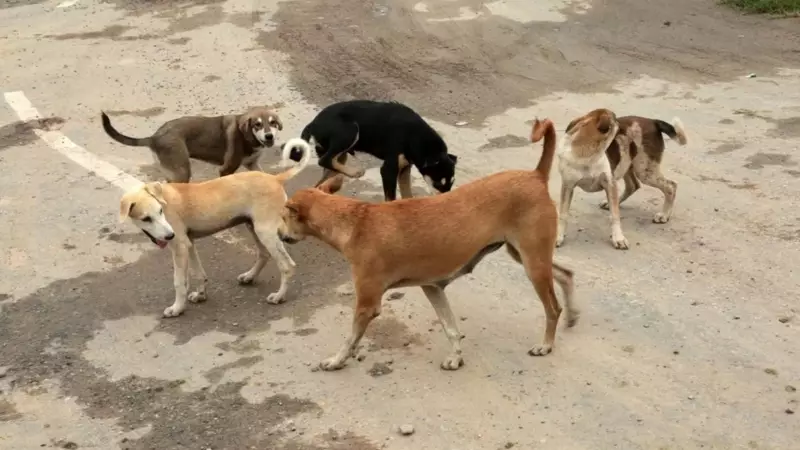
Major universities in Pune are confronting significant practical hurdles in enforcing a recent directive from the University Grants Commission (UGC) to keep stray dogs off their campuses. The order, issued in December 2025, follows a Supreme Court warning about a surge in dog-bite incidents in institutional areas.
Open Campuses and Public Access Pose Major Hurdle
The sprawling, open nature of campuses like the 400-acre Savitribai Phule Pune University (SPPU) on Ganeshkhind Road makes controlling canine ingress nearly impossible. Professor Nitin Karmalkar, who served as SPPU's vice-chancellor from 2017 to 2022, emphasized the public character of the institution. He stated that the campus remains freely accessible to visitors and vehicles, making it impractical to seal it off. "This (directive) will not work," Karmalkar remarked, recalling his own difficulties in managing access even during the COVID-19 pandemic.
Compounding the issue is the deep-rooted affinity of morning walkers and visitors for the resident strays. "Basically all the people who come for an early morning walk are pet lovers, and they feed the dogs. Once I tried to stop them, but they did not like it," Karmalkar added, highlighting the social resistance to the order.

Severe Staff Crunch Exacerbates Implementation Woes
Universities are also grappling with a critical shortage of manpower, which cripples their capacity to execute such directives. SPPU, for instance, is reported to have 62 per cent of its government-sanctioned faculty positions vacant as of September 2025, with non-teaching staff vacancies also remaining high. This shortage extends to affiliated and autonomous colleges due to a state government hiring freeze lasting over five years.
This lack of personnel directly impacts the ability to appoint and deploy staff for the task mandated by the UGC, which requires naming a nodal officer responsible for keeping strays away. "Where will they get this person?" questioned Karmalkar, pointing to the existing resource deficit.
Logistical Nightmares and Need for Expertise
Other educational leaders echoed these concerns, stressing the logistical and technical challenges. Professor Manohar Chaskar, Vice Chancellor of Swami Ramanand Teerth Marathwada University in Nanded, which has a 600-acre campus, noted the impossibility of complete control without a walled compound. "We will take precautions, but they (dogs) can’t be stopped 100 per cent," he said.
At Pune's Sir Parashurambhau College, Principal Professor Avinash Moharil described the emotional and practical difficulties. "It is really difficult... they are staying here for a long time," he said, referring to the dogs. While the college has begun restricting public entry and appointed a professor as nodal officer, the actual removal of dogs requires specialized skills. "To pick up dogs is not really something we can do. It is difficult to catch a dog. We need trained people for that," Moharil explained, adding that even professional security agencies hired by the college have failed to catch the animals.
The UGC's directive, backed by the Supreme Court's November 7, 2025 order, requires institutions to prominently display the name of the nodal officer at the campus entrance and notify local municipal bodies. However, the ground reality in Pune's academic spaces—characterized by open boundaries, severe staff shortages, and a compassionate public—presents a formidable wall against its seamless implementation.