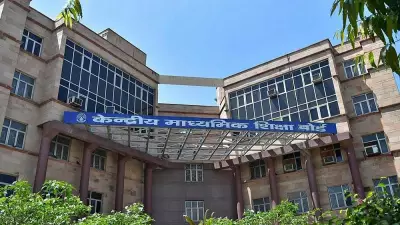
Rani Channamma University (RCU) in Belagavi finds itself at the centre of a major controversy, with serious allegations of a multi-crore rupee scam in the procurement of examination answer booklets. An RTI activist has filed a formal complaint, accusing the university administration of manipulating tender conditions and violating established financial norms, leading to significant losses for the state exchequer.
Detailed Complaint Alleges Tender Manipulation
RTI activist Dattatraya Kulkarni has submitted a comprehensive complaint to the chief secretary of the Karnataka government. The complaint focuses on a tender issued by RCU for a biannual rate contract to supply theory and practical examination answer books. Kulkarni alleges that the tender was deliberately designed to favour a pre-identified bidder by including restrictive and illegal conditions, which effectively eliminated fair and open competition.
According to the complaint, earlier tenders floated by the university were open to bidders from across India, which naturally resulted in competitive market pricing. However, in the latest tender process, RCU allegedly made GST registration within Karnataka a mandatory requirement. This move effectively barred bidders registered in other states from participating. Kulkarni argues that this condition violates national GST rules, which permit businesses registered in one state to operate across the country. He also states it contravenes the Karnataka Transparency in Public Procurements (KTPP) Act and relevant Supreme Court rulings that prohibit region-based restrictions in public tenders.

Restrictive Clauses and Alleged Price Escalation
The tender also reportedly disqualified proprietary and partnership firms from bidding. Kulkarni claims this was a targeted move aimed solely at restricting competition, contrary to the provisions of the KTPP Act. A major point of contention is the mandatory requirement for a 'dandy watermark' featuring the university logo on the answer book paper.
The complaint alleges that the university did not provide the necessary authorisation letters from the paper mill to most bidders, which are essential for obtaining paper with such a specific watermark. Consequently, only the previous supplier, who allegedly had prior access and an understanding with the university, was able to submit compliant samples and qualify for the technical and financial bids.
The complaint highlights an abnormal escalation in estimated prices. While universities like Kuvempu and Haveri awarded contracts at rates between Rs 12 and Rs 15 for 40-page answer sheets, RCU allegedly raised its estimates sharply to Rs 23 for 36 pages and Rs 21 for 32 pages. For comparison, recent tenders at Tumkur University were reportedly finalised for as low as Rs 9 for 36 pages, and Mandya University for Rs 12.50 for 32 pages.
Serious Charges of GST Evasion
Another grave charge in the complaint relates to potential Goods and Services Tax (GST) evasion. Kulkarni alleges that the university accepted and cleared invoices without GST, incorrectly showing the supply as exempt. He maintains that the printing of answer books constitutes the supply of goods and cannot be exempt from GST under the law.
He further alleges that the tender was wrongly classified under 'services' instead of 'goods' to evade GST liability. This misclassification, according to the activist, has caused losses running into crores of rupees to the state treasury. The Times of India attempted to contact RCU Vice-Chancellor Prof. CM Thyagaraja multiple times over the phone for his version, but he did not respond to the queries.
The allegations, if proven true, point to a serious breach of public procurement ethics and financial regulations at a state university. The complaint now puts the onus on the state government's chief secretary to investigate the matter thoroughly and take appropriate action.