Supreme Court Puts Brakes on UGC's 2026 Equity Regulations, Revives 2012 Framework
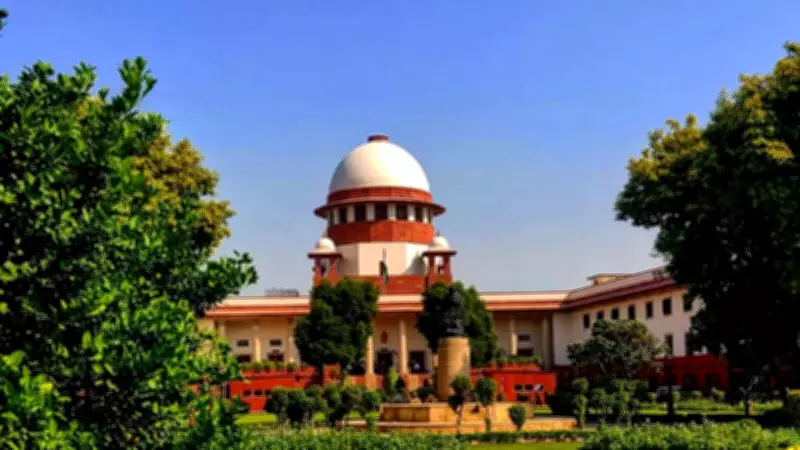
The Supreme Court of India delivered a significant ruling on Thursday, placing an immediate stay on the University Grants Commission's (UGC) Promotion of Equity in Higher Education Institutions Regulations, 2026. This judicial intervention effectively restores the older 2012 regulatory framework for higher education institutions across the nation, at least until the constitutional validity of the newer regulations undergoes thorough legal scrutiny.
Judicial Concerns Over Vagueness and Potential Misuse
The apex court expressed serious reservations about the 2026 regulations, particularly highlighting concerns about vagueness in definitions and the potential for misuse. The bench specifically pointed to Regulation 3(c), which deals with caste-based discrimination, finding its language insufficiently precise. The court warned that such ambiguous provisions could lead to unintended consequences and misuse within academic institutions.
"The Supreme Court has stayed the UGC Regulations and has kept them in abeyance. The Supreme Court has directed that UGC Regulations 2012 will be in operation till further orders," stated Vishnu Shankar Jain, who represented the petitioners challenging the new framework.

Understanding the 2012 Framework Now in Effect
With the stay in place, universities and colleges nationwide must revert to operating under the 2012 UGC regulations. This earlier framework represented the commission's inaugural formal attempt to combat discrimination in higher education through structured guidelines.
The 2012 regulations established several key provisions:
- Prohibition of discrimination based on caste, religion, gender, disability, language, and place of birth
- Requirement for institutions to appoint an Anti-Discrimination Officer
- Mandate to establish Equal Opportunity Cells on campuses
- Internal complaint handling mechanisms with preliminary inquiries
However, this system operated with notable limitations. It functioned largely as an advisory framework without strict enforcement timelines, external oversight mechanisms, or prescribed penalties for non-compliant institutions. The regulations also lacked explicit definitions for false complaints and comprehensive safeguards for accused individuals.
The Ambitious 2026 Regulations: What They Sought to Achieve
The now-stayed 2026 regulations represented a substantial expansion in both scope and enforcement mechanisms compared to their predecessor. These regulations aimed to create a more robust, accountable system for addressing discrimination in higher education institutions.
Key innovations in the 2026 framework included:
- Expanded protection explicitly including Other Backward Classes alongside Scheduled Castes and Scheduled Tribes under caste-based discrimination safeguards
- Elaborate institutional structures requiring universities to establish Equal Opportunity Centres, multi-member Equity Committees, Equity Squads, and Equity Ambassadors
- Enhanced accessibility through 24x7 helplines and online complaint portals
- Strict mandatory timelines for complaint resolution, including committee meetings within 24 hours, report submission within 15 working days, and institutional action within seven days
- Serious consequences for non-compliance, including potential loss of UGC funding, degree-granting authority, and institutional recognition
Despite these ambitious goals, critics raised concerns about the framework granting excessive discretion to internal committees, employing broadly worded discrimination definitions, and failing to establish adequate safeguards against potentially false or malicious complaints.

Petitioners' Perspectives on the Court's Decision
Advocate Vineet Jindal, one of the petitioners in the case, welcomed the Supreme Court's decision, noting that it aligned with arguments presented regarding Clause 3C of the regulations. "While the clause addressed caste-based discrimination, it included only certain castes and excluded the general category, giving the impression that the general caste was being specifically targeted," Jindal explained.
He further expressed concern that the new regulations appeared to create divisions among students, potentially undermining the constitutional principle of equality. According to Jindal, the Chief Justice of India acknowledged shortcomings in the regulations during proceedings, suggesting they required reconsideration and review.
Current Campus Operations Under the 2012 Framework
With the Supreme Court's stay order in effect, higher education institutions must immediately adapt to operating under the restored 2012 regulatory framework. This transition brings several practical implications for campus administration and student grievance mechanisms:
- Anti-Discrimination Officers and Equal Opportunity Cells will resume primary responsibility for handling complaints
- No mandatory timelines prescribed by regulation for complaint resolution
- Enforcement mechanisms remain largely internal and discretionary
- No UGC-level penalties linked to equity compliance failures
- Institutions cannot implement the expanded structures, strict timelines, or punitive provisions introduced in the 2026 regulations
The Supreme Court has issued notices to both the Central Government and the University Grants Commission, with the matter scheduled for further hearing on March 19. This stay represents a temporary pause rather than a permanent rejection of the 2026 regulations, leaving the door open for potential modifications or clarifications based on the court's eventual ruling on their constitutional validity.