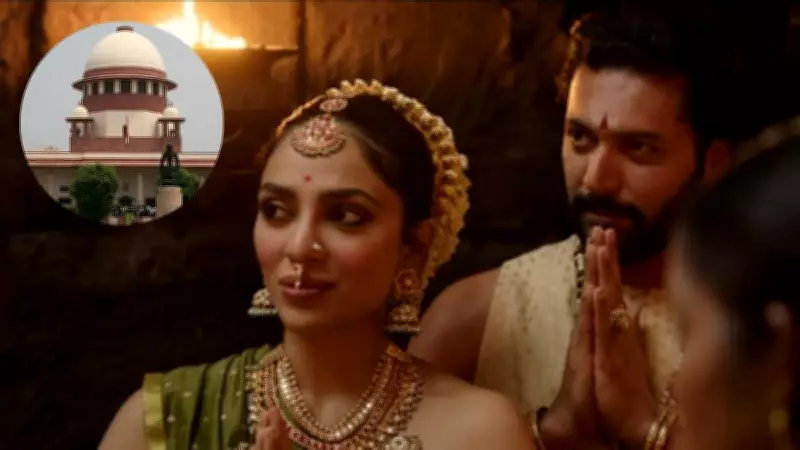
Supreme Court Disposes Plea as AR Rahman Agrees to Credit Junior Dagar Brothers in 'Veera Raja Veera'
In a significant development, the Supreme Court of India has officially disposed of a legal plea after renowned music composer AR Rahman consented to provide due credit to the Junior Dagar Brothers for their artistic contribution to the song 'Veera Raja Veera'. This resolution brings closure to a dispute that highlighted the importance of acknowledging traditional musical heritage in contemporary cinema.
Court's Directive and Resolution
During a hearing held on February 13, the apex court explicitly directed AR Rahman and the production team behind the acclaimed film "Ponniyin Selvan: II" to ensure "some acknowledgement" of the Dagarwani tradition's invaluable input. The Dagarwani tradition, a revered lineage in Indian classical music, was represented in this case by the Junior Dagar Brothers, whose expertise significantly enriched the musical composition.
The court's intervention underscored a broader principle of intellectual property and cultural respect, emphasizing that contributions from traditional artists must be formally recognized in mainstream projects. Following this directive, Rahman promptly agreed to amend the credits, thereby satisfying the judicial mandate and paving the way for the plea's disposal.

Background of the Dispute
The controversy stemmed from allegations that the creators of "Ponniyin Selvan: II" had utilized elements of the Dagarwani tradition in the song 'Veera Raja Veera' without appropriately crediting the Junior Dagar Brothers. This oversight sparked legal action, with petitioners arguing that such neglect not only violated ethical standards but also diminished the legacy of a centuries-old musical practice.
AR Rahman, celebrated globally for his innovative compositions, found himself at the center of this debate. The resolution demonstrates his commitment to upholding artistic integrity and legal compliance, as he moved swiftly to rectify the credit issue upon the court's advice.
Implications for the Entertainment Industry
This case sets a precedent for the Indian entertainment sector, particularly in how it handles attributions to traditional and classical artists. Key implications include:
- Enhanced Accountability: Filmmakers and music directors are now more aware of the necessity to document and credit all contributions, especially those rooted in indigenous traditions.
- Cultural Preservation: By ensuring proper acknowledgement, the industry helps preserve and promote India's rich musical heritage, preventing its dilution or misappropriation.
- Legal Clarity: The Supreme Court's stance provides a clear framework for resolving similar disputes in the future, potentially reducing litigation through proactive credit agreements.
The disposal of the plea marks a positive outcome, balancing creative freedom with respect for traditional artistry. It reinforces the idea that collaboration between modern cinema and classical forms can thrive when based on mutual recognition and legal adherence.
Future Outlook
With this matter resolved, attention now shifts to the implementation of the credit in official releases and promotional materials for "Ponniyin Selvan: II". Industry observers anticipate that this incident will encourage more transparent practices across Bollywood and regional film industries, fostering a culture where every artist's role is valued and documented.
In conclusion, the Supreme Court's role in facilitating this agreement highlights the judiciary's capacity to mediate cultural and artistic disputes effectively. AR Rahman's compliance not only resolves the immediate issue but also sets a commendable example for peers in the entertainment world.