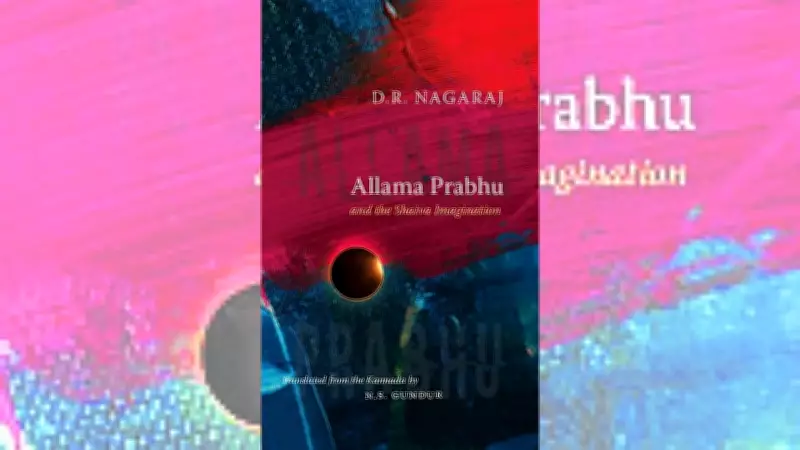
In his posthumously published work, 'Allama Prabhu and the Shaiva Imagination', D R Nagaraj offers a profound exploration of the 12th-century Kannada mystic poet. The book, edited by G. S. Amur and published by the Sahitya Akademi, argues that Allama Prabhu's true greatness lies not in providing definitive answers but in enlarging our capacities for questioning.
A Mystic Beyond Answers
Nagaraj, a renowned cultural critic and political thinker, delves into the vachanas (sayings) of Allama Prabhu, a key figure in the Lingayat tradition. He suggests that Allama's poetry opens up a space of radical inquiry, challenging both religious orthodoxy and secular rationalism. According to Nagaraj, Allama's work is a 'poetics of silence' that pushes the reader to the edge of language and thought.
Reinterpreting Shaiva Imagination
The book reinterprets the Shaiva imagination not as a fixed theology but as a dynamic, questioning tradition. Nagaraj connects Allama's insights to contemporary concerns about identity, spirituality, and social justice. He argues that Allama's critique of institutional religion and his emphasis on direct, personal experience of the divine remain relevant today.

Nagaraj's Methodology
Drawing on literary analysis, philosophy, and social theory, Nagaraj examines the vachanas as 'performative utterances' that create transformative experiences. He contrasts Allama's approach with that of other Bhakti poets, emphasizing the former's radical iconoclasm and refusal to settle into any doctrinal position.
Impact and Relevance
The book has been praised for its accessible yet rigorous style. Scholar H. S. Shivaprakash notes, 'Nagaraj helps us see Allama Prabhu as a philosopher of the limit, who constantly pushes us to confront the boundaries of our understanding.' The work is essential reading for students of Indian philosophy, literature, and religious studies.