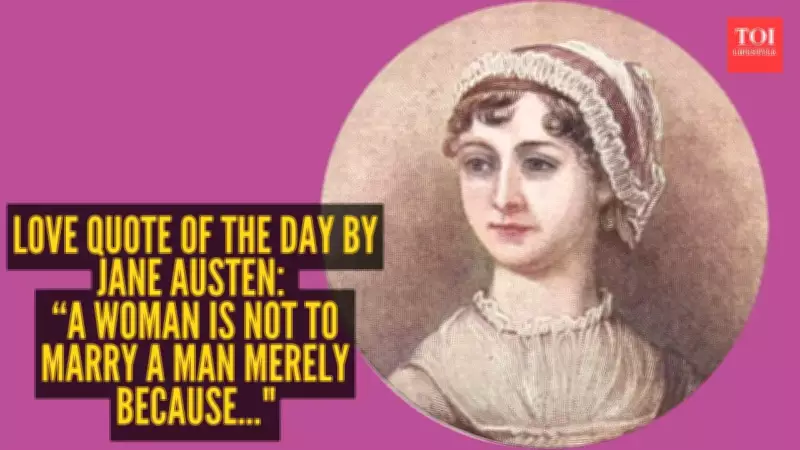
Jane Austen, the beloved English novelist, continues to offer profound insights into love and marriage, even two centuries after her works were published. In a famous line from her 1815 novel 'Emma,' she wrote: 'A woman is not to marry a man merely because she is asked, or because he is attached to her, and can write a tolerable letter.' This quote, which serves as the love quote of the day, remains startlingly relevant in today's world, where societal pressures around marriage persist, albeit in different forms.
The Context of Austen's Wisdom
Austen lived in an era when marriage was often the primary means for women to secure financial stability and social standing. A proposal, even from a less-than-ideal suitor, could feel like a golden opportunity not to be refused. However, Austen subtly challenges this norm, urging women to look beyond mere convenience or flattery. In her novels, she consistently portrays heroines who resist the pressure to marry for security, instead seeking genuine respect, trust, and emotional connection.
Why Austen's Words Still Resonate
The quote from 'Emma' is particularly powerful because it dismantles the idea that a woman should say 'yes' simply because she has been asked. Austen argues that marriage should be a thoughtful, intentional choice, not a reflexive response to a proposal. She warns against marrying for superficial reasons, such as being flattered by a man's attachment or impressed by his writing skills. Instead, she encourages women to ask themselves deeper questions: Do I respect this person? Do I trust him? Do I want to build a life with him?

In today's world, the pressures may look different, but they are no less real. Women may feel compelled to marry because their family is eager, their friends are settling down, or they fear being alone. Austen's words serve as a gentle reminder that fear of disappointing others or missing out is not a valid reason for such a life-altering decision.
The Danger of Flattery and Convenience
Austen's critique extends to the notion that being cherished or flattered is enough to sustain a marriage. A man may be fond of a woman, think she is special, and even be charming on paper, yet lack the maturity, values, or emotional depth needed for a lasting partnership. Austen suggests that attachment and manners are insufficient; a woman must evaluate whether her partner truly sees, supports, and respects her.
Independence in Austen's Heroines
Throughout her novels, Austen champions women who question, delay, or even refuse proposals that might seem 'sensible' on the surface. Characters like Elizabeth Bennet, Emma Woodhouse, and Fanny Price grapple with societal expectations but ultimately hold onto their right to choose according to their own standards. This quote from 'Emma' distills that independence into a clear principle: a woman is not a prize to be claimed by the first acceptable suitor; she is a person with judgment, taste, and the right to say 'not yet' or 'not this one.'
Timeless Relevance
Austen's insight remains incredibly powerful today because it challenges the lingering pressure to marry early or settle for the first person who proposes. It forces women to demand genuine compatibility and mutual respect, rather than feeling flattered simply because they were 'chosen.' In a culture that still often treats a woman's relationship status as a measure of her success, Austen's mindset feels like a quiet act of rebellion. Saying 'yes' to a partner should not be a desperate surrender to societal expectations, financial security, or family pressure; it must be a conscious choice to build a life with someone who truly understands and values one's worth.
Ultimately, Austen's quote reminds us that turning down a perfectly safe, comfortable option requires courage. It encourages women to hold out for a partner who respects their independence and shares their values, making marriage a partnership of equals rather than a transaction of convenience.