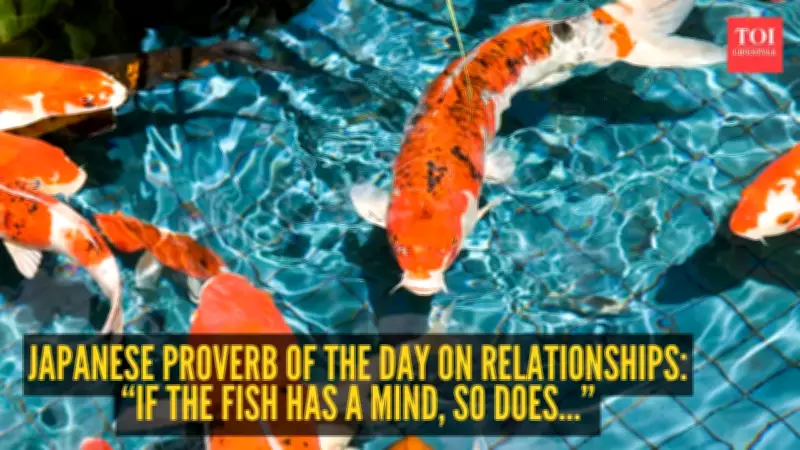
There is an old Japanese proverb that sounds incredibly simple on the surface, but completely flips how you view your life once it finally clicks: "Uo gokoro areba mizu gokoro." Translated literally, it means: If the fish has a mind, so does the water. This beautiful imagery carries a punchy truth about reciprocity and deep connection. It reminds us that we do not exist in a vacuum. We are not just isolated creatures moving through a blank world; we are completely intertwined with our environment. Change the fish, and the water reacts. Change the water, and the fish struggles.
Swimming, Not Floating
A fish does not swim through empty space. It moves through a medium that pushes back, holds it up, and carries it along. Every single flick of that fish's tail creates a ripple that disturbs the water, and every current shapes exactly where the fish can go. We do the exact same thing every day. Our moods, choices, and anxieties are not just trapped inside our own skulls—they are constantly reacting to, and reshaping, the spaces we inhabit. Your family, your workplace, and your friend groups are your "water."
Breaking Out of Isolation
Modern life loves to pretend we are all completely independent, self-sufficient units competing against each other. This proverb reminds us that we are actually part of a massive, living network. The vibe is real: When you feel chronically stressed, exhausted, or defensive, it is easy to blame yourself for not being "strong" enough. But sometimes, it is just the water you are swimming in—a toxic job, a draining relationship, or a chaotic routine will warp your mindset no matter how hard you fight it. The ripple effect: What you bring into a space matters. If you walk into a room carrying pure anger, the water turns turbulent for everyone. If you bring calm, the ripples naturally calm the people around you. Fixing the dynamic, not just the person: In relationships, this proverb teaches us to zoom out and look at the whole ecosystem. When a partner, friend, or coworker snaps at you or shuts down, our knee-jerk reaction is to judge them or push back defensively. Instead, look at the water. Ask yourself: Are they drowning in stress right now? Are they swimming in old hurts or feeling completely misunderstood? Shifting your perspective from "Why are they acting like this?" to "What kind of environment is shaping their behavior right now?" instantly builds empathy and cuts through petty conflict.

Creating Your Own Calm
Ultimately, this wisdom is a call to take responsibility for the energy you put out into the world. If you want to experience a life filled with trust, respect, and peace, you have to actively pour those qualities into your daily interactions. Give what you want to get: You cannot expect the water to be smooth if you keep tossing rocks into it. Be fully present: Treat a quiet morning, a sunset, or a quick chat with a coworker as a live interaction. Witness your surroundings dissolve upon your arrival with genuine purpose.
The Lesson
Amidst a rapidly changing world consumed by haste and dominance, make an effort to decelerate and pay homage to the current. You are not separate from the world; you are in a continuous dance with it. When the fish moves, the water moves. When you change, your world changes with you.