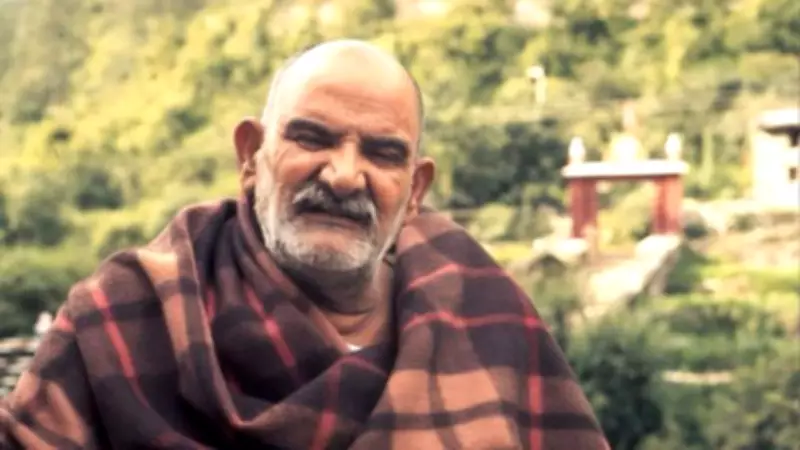
India is a land where faith, culture, religion, and mystical powers intertwine. Among its most revered mystics is Neem Karoli Baba, affectionately called Maharaj ji by his followers. His influence reached far beyond local borders, inspiring Apple co-founder Steve Jobs and American spiritual leader Ram Dass. One iconic image shows him wrapped in a plain woolen blanket, which he reportedly never removed, regardless of the weather—be it the freezing Himalayan winter or scorching summer. This peculiar sight often puzzled visitors, prompting questions about its significance.
Why Did Neem Karoli Baba Always Wear a Blanket?
While no definitive historical explanation exists, devotees and biographers view the blanket as a powerful spiritual symbol rather than mere clothing.
Spiritual Significance
Dada Mukherjee, a devoted follower and biographer, often said the blanket seemed an extension of Baba's essence. It accompanied him everywhere, occasionally emitting a newborn's scent and becoming unexpectedly light or heavy, as if possessing its own consciousness. Dada remarked, “There were two blankets: one visible, covering his physical body, and another, invisible, concealing the vastness of his spiritual achievements.”

Symbol of Detachment
The blanket was not just a garment but a symbol of detachment and spiritual power. Maharaj ji frequently spoke about detachment. When a devotee tried to adjust his blanket, Baba said, “Leave it, let it remain as it is. No one should be bound by anything.” Followers believe this reflects the Hindu principle of vairagya (detachment). The blanket represents the idea that the body is temporary, merely a covering for the eternal soul. By showing indifference to comfort and appearance, Baba encouraged seekers to focus on inner awareness.
Protection for Devotees
Another reason for the blanket was to protect devotees. Baba would take on their illnesses and karma. Dada explained, “That blanket hid all the pain and suffering he had taken from others. It not only covered his body but also contained many spiritual powers to remove devotees' suffering.” Many believe he would place the blanket on ill individuals to heal them. One devotee described how, during a cold winter night, the blanket radiated warmth and comfort to those nearby.
Peace in Life
The blanket's color—blue or light—is also significant. Blue symbolizes purity and peace. Thus, many believe Baba wore it to remain at peace with himself and life, maintaining his spiritual state. He taught that humans are not merely physical bodies but expressions of deeper spiritual reality. The blanket symbolized indifference to bodily sensations like heat or cold, focusing on the spiritual journey.
Concealing His Siddhis
Despite his simplicity, Neem Karoli Baba was known to possess siddhis (spiritual powers) that he rarely discussed. The blanket served as a veil to keep these divine abilities hidden. Dada said, “Why was he hiding all this? Perhaps for our protection, or to save himself from crowds of followers.”
A Blanket for Baba
Psychologist Richard Alpert, who became Baba Ram Dass after meeting Baba, wrote the book 'Miracle of Love' in 1979. He recounted an incident called the bulletproof blanket. He noted that because Baba always wore the blanket, devotees visiting Kainchi Dham Ashram offer a blanket instead of flowers or garlands.
Why the Image Still Resonates Today
Even decades after his passing in 1973, photographs of Neem Karoli Baba wrapped in his blanket continue to inspire millions worldwide. In homes and online, he appears with a smile, covered in the blanket. For some, it represents unconditional love and protection; for others, humility, renunciation, and the pursuit of inner peace. While historians cannot conclusively explain why Baba preferred the blanket in all seasons, devotees believe its significance transcended practicality.
In his later years, Dada Mukerjee reflected, “He carried the weight of the world under that blanket. It was his way of shielding us from the harsh realities of karma and suffering.” He added, “The blanket was his way of reminding us that everything we seek is already within us. It is not the outer trappings but the inner journey that truly matters.”