

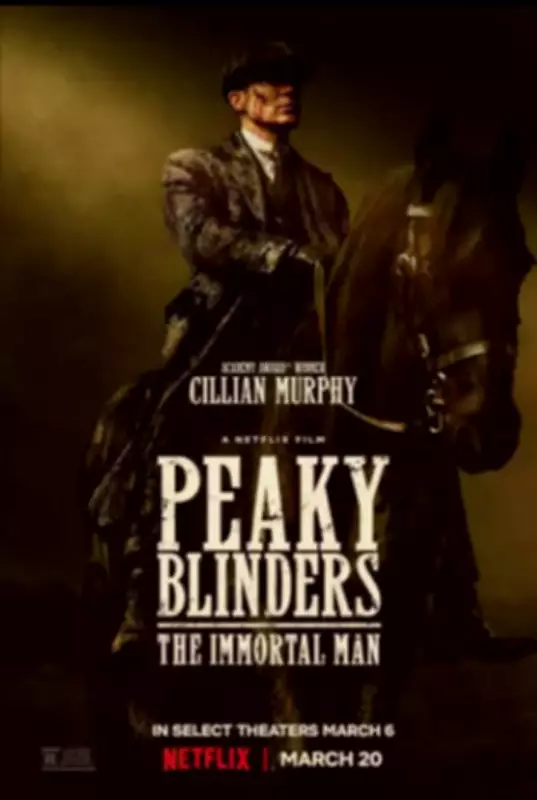
Peaky Blinders: The Immortal Man Movie Review
Peaky Blinders: The Immortal Man successfully concludes the iconic crime saga with a focused narrative that prioritizes closure over experimentation. Released on March 20, 2026, this English-language crime and drama film runs for 1 hour and 52 minutes, earning a consistent 3.5 rating from both critics and audiences.
A World at War and a Family in Peril
The story unfolds during World War II, pulling Tommy Shelby (Cillian Murphy) out of self-imposed isolation. A sinister Nazi-linked network plots to destabilize Britain's economy through counterfeit currency, forcing Tommy to reunite with his estranged son, Duke (Barry Keoghan). Simultaneously, Ada Shelby (Sophie Rundle), now a Member of Parliament, investigates witnesses connecting Duke to a factory looting case. Her murder by Beckett (Tim Roth), a Nazi operative, ignites Tommy's return to Birmingham, setting the stage for a collision of family loyalties, power struggles, and national security threats.
Familiar Territory with Purposeful Execution
The film deliberately avoids radical plot deviations, instead functioning as a conventional revenge drama within the established Peaky Blinders universe. Its strength lies in accessibility; newcomers can follow the narrative without prior series knowledge, while longtime fans appreciate the consistent tone and direct storytelling. The plot, inspired by a real WWII incident where explosives killed Birmingham arms factory workers, builds a fictional tale around historical trauma, maintaining a brisk pace that keeps viewers engaged despite occasional narrative gaps.

The production never wastes time re-establishing its violent world, dropping audiences directly into the action as if the chaos never paused. This approach reinforces the film's central theme: every action carries inevitable consequences, though the emotional depth of these moments sometimes feels underexplored.
Stellar Performances in a Polished Setting
Cillian Murphy delivers a masterfully restrained performance, portraying Tommy Shelby as a weary yet strategic figure who only fully unravels towards the climax. Barry Keoghan injects fresh energy as the conflicted Duke, balancing eagerness with uncertainty. Sophie Rundle provides Ada with a grounded, mature presence, while Tim Roth embodies menace as the Nazi conduit Beckett. A brief but impactful cameo by Stephen Graham alongside Murphy highlights the film's strong ensemble cast.
Visually, the film excels with rich production design and atmospheric cinematography that captures the WWII era's tension and devastation. The style never overshadows substance, ensuring the story remains the focal point.
A Satisfying, If Imperfect, Conclusion
Peaky Blinders: The Immortal Man wraps up the saga neatly, offering the closure the narrative demands, albeit with a slightly rushed feeling. It stays true to the series' gritty tone while expanding its scope to broader political conflicts. Not every sequence resonates equally, and some viewers may find certain elements divisive, but the film remains consistently engaging.
For dedicated followers, it provides a poignant ending shaped by ambition, regret, and the costs of prolonged power. For others, it serves as a compelling standalone crime drama set against a historical backdrop. Ultimately, the film succeeds as a fitting final chapter, proving that even without perfection, a story can end on a strong, memorable note.

