

The Super Mario Galaxy Movie Review: All Jump, No Landing in This Overstuffed Space Adventure
Archika Khurana, TNN
Updated: April 02, 2026, 11:20 PM IST
Story Synopsis
When Bowser Jr. captures Princess Rosalina to unleash a devastating weapon, Mario and Luigi join forces with Peach and Yoshi. Their intergalactic quest becomes a race against time to rescue her and prevent universal destruction.
Critical Analysis
There exists a version of The Super Mario Galaxy Movie that almost succeeds—one that pulses with genuine warmth, emotional stakes, and authentic wonder. You can glimpse it in scattered moments: a hesitant Bowser grappling with villainy versus reform, or the fleeting tenderness between Princess Peach and Rosalina. However, these fragments never fully coalesce into a satisfying whole.

Instead, co-directors Aaron Horvath and Michael Jelenic, alongside writer Matthew Fogel, deliver a film that leans heavily on spectacle and nostalgia without fully grasping the emotional core that made its predecessor resonate. To its credit, this 98-minute feature wastes no time on exposition. It assumes familiarity with the Mario universe and plunges directly into intergalactic chaos.
For viewers already invested in this world, the dazzling visuals—swirling galaxies, vibrant creatures, and kinetic action sequences—offer a certain sensory thrill. Yet, this approach becomes a double-edged sword. Without proper grounding or narrative clarity, the film often feels like a series of loosely connected levels rather than a cohesive story.
Narrative and Character Shortcomings
The central conflict—Bowser Jr. (Benny Safdie) kidnapping Rosalina (Brie Larson) to power a universe-threatening weapon—has the makings of a compelling arc. However, the storytelling remains frustratingly surface-level. Emotional beats are introduced, hinted at, and then quickly abandoned in favor of frenetic action or slapstick humor.
The result is a film that gestures toward depth but never commits to it. Characterization feels uneven. Mario (Chris Pratt) and Luigi (Charlie Day), ostensibly the heart of the franchise, are surprisingly sidelined. Their journey unfolds in parallel but lacks urgency or emotional investment, making them feel like secondary players in their own film.
Even Mario's budding dynamic with Peach (Anya Taylor-Joy) is underdeveloped, reduced to a faint suggestion rather than a meaningful thread. In contrast, supporting characters often leave a stronger impression. Yoshi, voiced with infectious charm by Donald Glover, brings a welcome sense of playfulness.
Bowser Jr. emerges as a delightfully exaggerated antagonist driven by recognizable insecurities. Jack Black's Bowser, though less central than before, still injects moments of personality into the narrative. Yet, even these performances cannot fully compensate for the film's lack of focus.
Visuals and Pacing Issues
The introduction of new elements—from Rosalina's maternal bond with the Lumas to an expanded roster of side characters—should have enriched the universe. Instead, they contribute to an overwhelming sense of clutter. The film constantly throws new ideas, characters, and references at the audience, rarely allowing any to breathe.
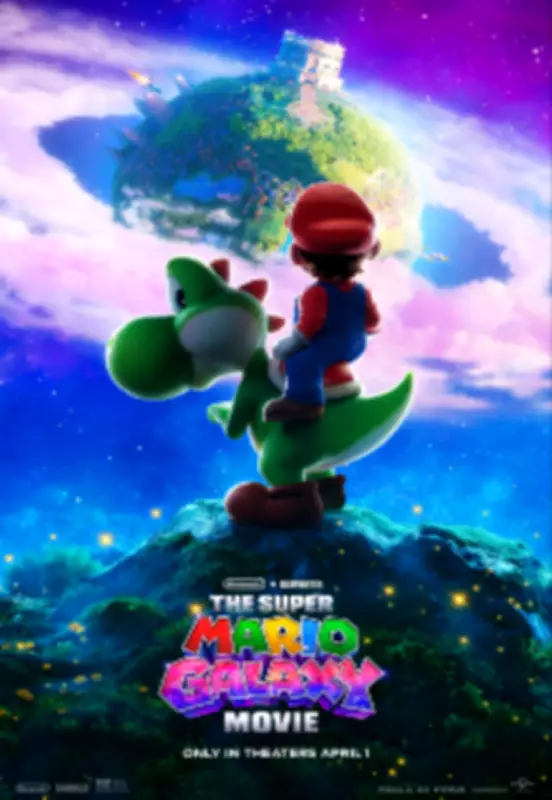
What should feel expansive instead feels crowded and oddly impersonal. Visually, the film rarely falters. Illumination's animation is bright, polished, and often striking, capturing the whimsy of the Mario universe with impressive detail.
Action sequences are dynamic and imaginative, filled with gravity-defying chases and colorful set pieces. But even here, excess becomes a problem. The relentless pace leaves little room for tension or payoff, turning what should be exhilarating into something strangely numbing.
Nostalgia and Final Verdict
One of the more surprising shortcomings is the film's use of nostalgia. Where the first movie balanced fan service with storytelling, this installment leans too heavily on references and Easter eggs. Rather than enhancing the narrative, these moments often feel like distractions—quick nods designed to elicit recognition rather than emotion.

Ultimately, the film suffers from a lack of a clear center. It does not anchor itself in a strong character arc or a compelling emotional journey; instead, opting for a scattershot approach that prioritizes movement over meaning. The result is a film that feels more like a product—an energetic, visually appealing one—than a fully realized story.
That said, it is not without its audience. Younger viewers and dedicated fans of the franchise may find enough to enjoy in its vibrant visuals and constant activity. But for those seeking the charm, wit, and emotional resonance that elevated recent video game adaptations, The Super Mario Galaxy Movie proves to be a step backward.
In the end, it is a film that keeps running, jumping, and spinning—but rarely pauses long enough to truly land.
Critic's Rating: 2.5/5
Users' Rating: 2.5/5
Duration: 1 hour 38 minutes
Release Date: April 3, 2026
Genre: Adventure, Animation, Comedy
Language: English
