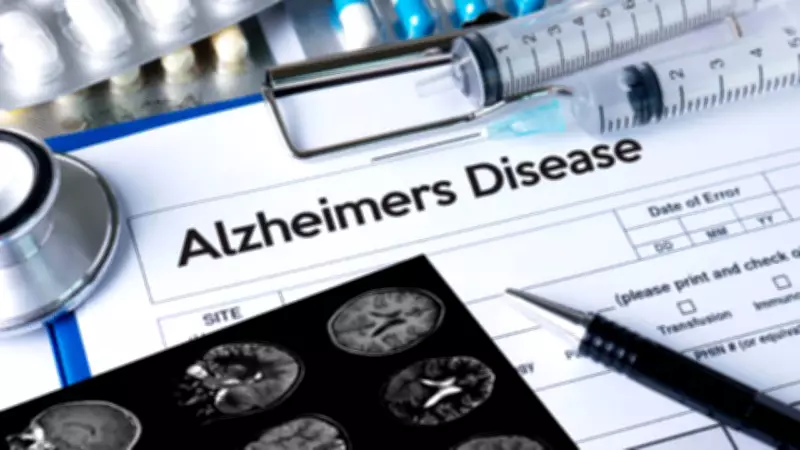
Alzheimer's disease is the most common cause of dementia, accounting for roughly 60 to 70 percent of all cases worldwide. It is a progressive brain condition that gradually destroys memory, thinking ability, and eventually the capacity to carry out even the simplest daily tasks. The condition typically begins with subtle signs such as forgetting recent conversations, misplacing objects, or struggling to find the right word. While these symptoms are often dismissed as normal aging, Alzheimer's is distinctly different. In the brain, abnormal protein deposits, including clumps of amyloid beta and tangled threads of tau, build up and interfere with how nerve cells communicate. Over time, these cells die. The more we understand about how the disease starts, the better the chances of one day stopping it.
Myths About Alzheimer's Disease Debunked
Dr. Joy Desai, Director of Neurology at Jaslok Hospital and Research Centre, has debunked several common myths surrounding Alzheimer's disease.
Myth One: Dementia and Alzheimer's Disease Are Synonymous
Dementia is a term that implies a progressive loss of acquired brain-related skill sets, resulting in a decline in functional efficiency. Neurologists divide these skill sets into domains: personality and behavior, memory, language, praxis (the ability to perform complex sequential tasks without focusing on individual steps), visuo-spatial skills (the ability to navigate geographic spaces), and executive functions (goal-directed behavior, motivation, social harmony, recognition of cause and effect, etc.). The term dementia is used when impairment occurs in three or more of these domains. Alzheimer's is one type of degenerative dementia, but there are many other causes.

Myth Two: Alzheimer's Disease Occurs Only in Old People
Alzheimer's disease can also occur in younger individuals, especially in familial cases caused by specific mutations in genes such as Presenilin 1, Presenilin 2, and APP. These genes play an important role in maintaining the biological integrity of the brain's neural networks. Families with these mutations, such as those studied in the town of Yarumal in Antioquia, Colombia, have contributed to the understanding of susceptibility and resilience to the precipitation of Alzheimer's changes in human brains.
Myth Three: If One Lives Long Enough, Alzheimer's Disease Is Certain
While the risk of developing Alzheimer's disease increases with age, biological investments can protect against it. These include dietary discretion (a diet rich in greens, legumes, and proteins, and low in processed foods), regular cardiovascular and resistance exercises (which produce exerkines like irisin and meteorin-like protein that protect against Alzheimer's), a rich social network, fulfilling purposeful activity, a lifetime pursuit of awe and learning, sleep hygiene, and managing pollution and hearing impairment. Additionally, genetic protective factors such as klotho variants, aquaporin 4 genes, and the Christchurch mutation can impart resilience to the risks of aging, resulting in "super-agers" whose cognitive abilities remain intact into their eighties.
Myth Four: Alzheimer's Disease Is a Psychiatric Disorder
Alzheimer's disease is a tragic consequence of injured brain networks resulting from abnormal protein deposition both within and outside neurons, leading to inflammation in the brain and loss of function. While some patients initially present with behavioral changes and personality changes, the underlying disorder is not psychiatric. Alzheimer's disease is best evaluated by trained neurologists experienced in the assessment and management of cognitive disorders.

Myth Five: There Is No Therapy for Alzheimer's Disease, So Evaluation Is Meaningless
Although Alzheimer's disease is relentlessly progressive and no therapy has resulted in reversal, symptomatic medications can improve the burden of symptoms, especially neuropsychiatric manifestations. This can relieve caregiver burden and improve patient quality of life. In the very early stage known as minimal cognitive impairment, emerging immunotherapies in the research pipeline may offer benefits. Diligent and judicious evaluation of patients can also lead to successful treatment of Alzheimer's mimics, such as autoimmune encephalitis and reversible symptomatic dementias. Recent trials have raised hopes for meaningful therapies emerging soon.