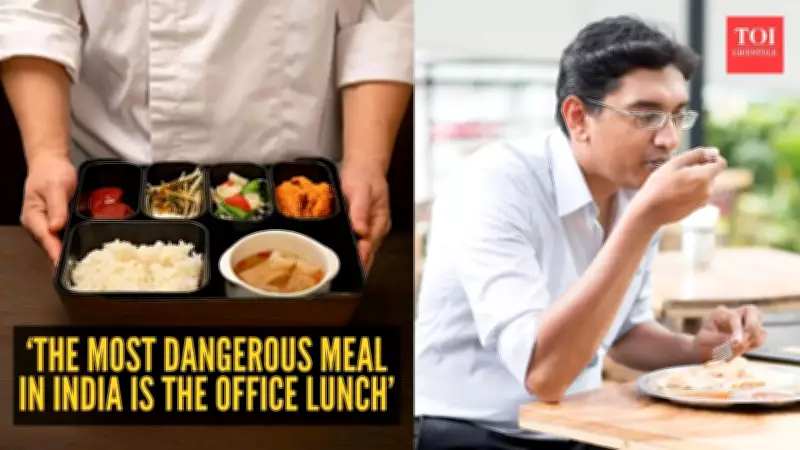
In most offices, lunch is an afterthought—quick, simple, and often squeezed between tasks. But a recent online discussion has raised questions about corporate cafeteria food and its potential long-term health effects on working professionals.
Corporate Cafeteria Food Becomes a Talking Point
The debate began after entrepreneur Dr. Yashawant Kumar shared a post on LinkedIn, which quickly spread and sparked wider conversation among employees about the quality of office meals and their health impact over time.
Street Food Perception vs. Office Meal Trust
Kumar noted a common behavior: people often avoid street food due to hygiene concerns, yet trust office cafeteria food because it is prepared in a controlled setting. However, he argued that this assumption may be incomplete. While street food can cause short-term stomach issues, regular consumption of office meals high in refined carbohydrates, oil, and processed ingredients may lead to chronic health problems over years.

What a Typical Office Meal Looks Like
He described a familiar lunch pattern: white rice with low fiber, overcooked dal, oily vegetables, and fried snacks, often eaten quickly at desks. The main concern is repetition—when such food becomes a daily habit, it may be linked to Type 2 diabetes, hypertension, and fatty liver disease.
Health Issues That Develop Over Time
Kumar highlighted that lifestyle diseases develop slowly, often without early symptoms. He noted that companies invest in wellness programs like fitness activities and health apps, but cafeteria food often lacks the same attention, despite being a daily staple for employees.
Suggestion for Better Food Options at Work
Kumar suggested companies provide at least one nutritious and affordable meal option in cafeterias, not just small salads but filling alternatives. He emphasized that workplace food habits should be seen as a systemic issue, not just individual choice.
Online Reactions and Ongoing Discussion
The post sparked many responses, with professionals sharing experiences about limited cafeteria options and busy schedules affecting eating habits. Health experts have long pointed to poor diet, lack of activity, stress, and prolonged sitting as major factors in lifestyle diseases among urban workers. The discussion continues online, prompting many to reevaluate their office eating habits.
Disclaimer: This article is based on social media information and online discussions. The Times of India has not independently verified all claims.