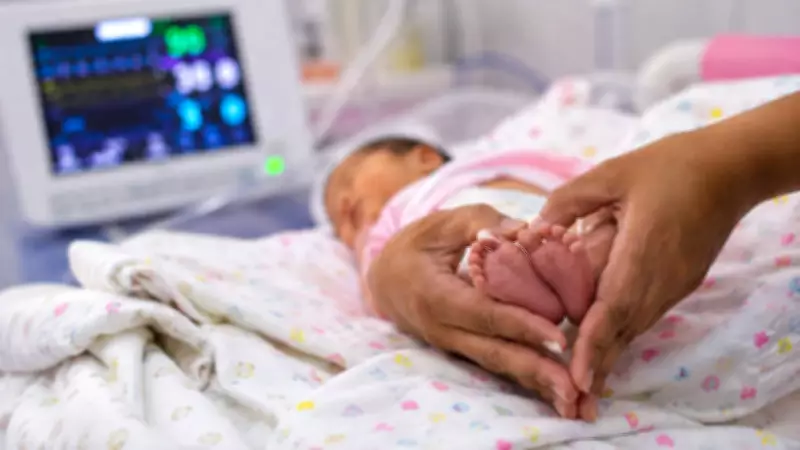
BENGALURU: For Lakshmi and Krishna (names changed), six years of waiting ended in joy when IVF helped them welcome twins. But within days of becoming parents, the farming couple from Tumakuru district found themselves desperately searching for someone willing to save their critically ill newborn daughter. It was then that compassion, backed by medical expertise and charitable support, changed the course of their lives.
Their daughter, Baby N (name changed), was born prematurely, weighing just 1.8 kg. She developed breathing difficulties soon after birth and struggled to feed, forcing doctors to admit her to the neonatal intensive care unit (NICU). Tests suggested she had a complex congenital heart defect called Total Anomalous Pulmonary Venous Connection (TAPVC), in which the veins carrying oxygen-rich blood from the lungs connect abnormally to the heart.
"I kept wondering why she wasn't gaining weight. Then we were told there was a problem with her heart," Lakshmi recalled. "We went to several hospitals, but many refused to operate because she weighed too little. My husband is a farmer, and we simply couldn't afford such expensive surgery. We even attended free medical camps, but nothing worked."

With hope fading, help came through the Neonates Foundation of India (NFI), an organisation that partners with NICUs to fund life-saving care for critically ill newborns. Through its intervention, Baby N was referred to Manipal Hospital, Old Airport Road, where doctors decided to take on a case that many others had turned away. By then, the infant weighed just 3 kg.
Unexpected Diagnosis During Surgery
Dr Devananda N S, head of the department and consultant, cardiothoracic vascular surgery, heart and lung transplant surgery, decided to proceed despite the risks associated with operating on such a small baby. However, once the surgery began, the team encountered an unexpected challenge.
Although pre-operative investigations had pointed to TAPVC, surgeons discovered that Baby N actually had Cor Triatriatum, a rare congenital heart defect where a fibromuscular membrane divides either the left or right atrium into two separate chambers, resulting in a three-chambered atrial structure. The finding required the surgical team to modify the surgical procedure. The surgery was successfully completed, restoring normal blood flow through the heart.
"Congenital heart surgery is not just about performing a procedure. Every child can have a unique anatomy. The ability to recognise unexpected findings and adapt the surgical strategy in real time comes from experience, teamwork and a comprehensive support system," Dr Devananda said.
Financial Burden Lifted by Charities
The family's financial burden was equally overwhelming. The treatment and surgery cost nearly Rs 18 lakh, an amount far beyond their means. The entire expense was covered through the combined support of the Manipal Foundation, the Neonates Foundation of India and the Adhyan Charitable Trust.
Today, Baby N has crossed another important milestone. She now weighs over 4.5 kg, no longer requires cardiac medications, and is recovering well.
"When we thought there were no other options, the kindness shown by these organisations saved our baby," Lakshmi said. "We want other parents facing similar struggles to know that they should not hesitate to seek help. Sometimes, help can make all the difference."