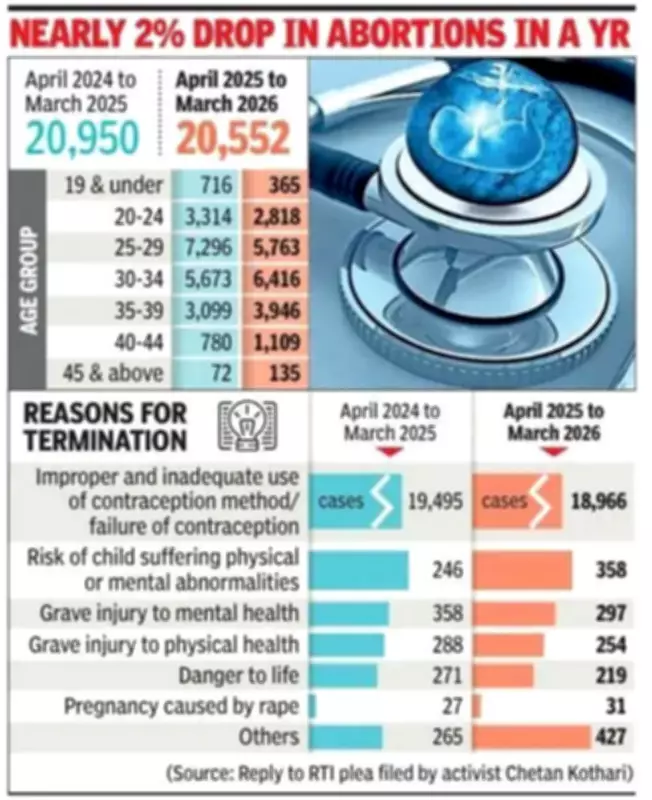
Mumbai has achieved a significant milestone in maternal healthcare by recording zero abortion-related deaths for the second consecutive year in 2025-26. This marks a dramatic improvement from 19 such fatalities in 2017-18, as revealed in a response to a Right to Information (RTI) plea. During the same period, more than 20,000 abortion procedures were performed across the city.
Declining Maternal Mortality and Abortion Deaths
A doctor from the Brihanmumbai Municipal Corporation’s (BMC) health and family welfare department noted that the city has experienced an overall decline in maternal mortality as well as abortion-related fatalities over recent years, with monthly figures dropping to single digits. In 2023-24, only two deaths were linked to abortions—one due to septicaemia (a bacterial infection of the uterus shortly after abortion) and the other due to hepatic encephalopathy (a decline in brain function caused by an underlying liver disorder). The 19 deaths recorded in 2017-2018, which occurred during or soon after abortions, involved patients with severe comorbidities such as heart disease, tuberculosis, and HIV. Only three of those fatalities were directly caused by septicaemia.
Contraception Failure a Major Factor
According to the RTI reply, over 92% of the abortions performed in 2025-26 were attributed to “improper and inadequate use of contraception method or failure of contraception.” A similar trend was observed in the previous year. The health department official clarified that these figures include cases where no contraception was used at all. A gynaecologist at Sion Hospital pointed out that the absolute number of abortions has declined, which has consequently led to a reduction in procedure-related mortalities. Abortions plummeted by 41% from over 35,000 in 2017-18 to 20,552 in 2025-26. The doctor added, “There is increasing reluctance among medical practitioners to provide second-trimester abortions out of fear of false allegations regarding sex determination.”

Data Collection Challenges
Dr Nikhil Datar, a city-based gynaecologist, emphasized that the data collection mechanism for abortions requires significant improvement. He explained that while BMC only collects data from ‘registered abortion centres,’ the law permits any gynaecologist to prescribe medical termination pills directly from their private clinics. Although these cases are completely legal and compliant, they are omitted from official figures because independent clinics are not classified as ‘registered centres.’ Dr Datar elaborated, “The distinction widened after abortion evolved from surgical procedures to also include medical methods. A registered abortion centre is legally required to handle the surgical aspects, but a doctor does not need a registered centre to prescribe a pill-based abortion. The doctor can do it from the centre or at their own clinic.” He noted that doctors have spent years requesting BMC to include private clinic cases in its data, but the civic body still lacks the necessary mechanism and continues to insist on counting only procedures performed at registered centres.
BMC’s Response
Dr Daksha Shah, Executive Health Officer of BMC, countered that data from private clinics is also collected as per the rules. She stated, “Many who avail themselves of medical termination of pregnancy at various tertiary hospitals are also from outside Mumbai.” This highlights the complexity of accurately tracking abortion-related statistics in a metropolitan area.