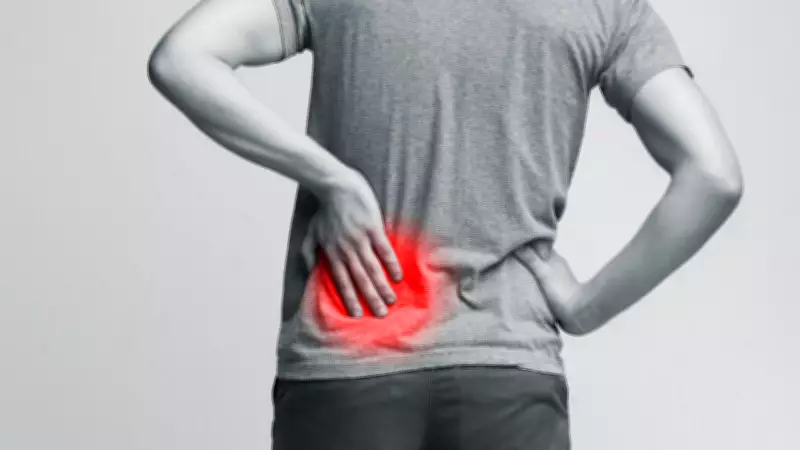
Sudden back pain is often dismissed as a muscle issue from long hours at a desk or a bad mattress. However, it could signal something more serious: kidney stones. These small mineral deposits can cause intense pain that mimics back problems but requires different attention. Knowing how to spot kidney stones early can prevent kidney damage and complications.
Why Kidney Stones Feel Like Back Pain
Back pain from kidney stones differs from muscle strain. It appears suddenly, often sharp and severe, and does not improve with rest. Dr. Ankur Bhatnagar, Senior Consultant and Head of Urology and Renal Transplant at Accord Super Speciality Hospital, Faridabad, explains that sudden back pain can be a symptom of a kidney stone or a stone in the ureter. Pain radiating to the flank and then moving anteriorly to the groin is characteristic of renal colic due to a stone. This pain typically starts near the ribs on either side of the spine, travels forward to the lower abdomen or groin, and comes in waves. Dr. Ritesh Monga, Clinical Director and Head of Urology at Marengo Asia Hospitals Faridabad, adds that such pain is usually felt in the flank and often travels to the lower belly or groin. Unlike muscular pain that stays localized, kidney stone pain moves, which is a key clue.
What Happens Inside the Body
The pain has a mechanical cause. Dr. Monga explains that when a stone blocks the flow of urine from the kidney, it clogs the drain. Urine backs up, causing the kidney to swell and stretch, triggering intense pain signals. Even a small stone can cause severe pain, as size does not always predict severity. Dr. Bhatnagar notes that the severity of pain and risk of infection may not be related to stone size. If left untreated, a blocked kidney can lead to infection and irreversible damage.

Early Signs to Watch For
Kidney stone pain rarely occurs alone. Common accompanying signs include nausea or vomiting, a burning sensation while urinating, blood in the urine, a frequent urge to urinate, and pain that comes in waves. These symptoms are often ignored, especially if painkillers provide temporary relief. Dr. Bhatnagar warns that lack of awareness leads patients to take heavy doses of analgesics without consulting a doctor, causing irreversible kidney damage. Pain relief is not a substitute for treatment.
Who Is at Risk
Kidney stones are becoming more common, especially in warmer regions and urban areas. Risk factors include low water intake or dehydration, a diet high in salt, sugar, or animal protein, obesity, and conditions like diabetes or hypertension. Family history also plays a role. India's high temperatures can lead to chronic dehydration, increasing risk. Recurrence rates can reach nearly 50 percent, making prevention as important as treatment.
Modern Treatment Options
Treatment has advanced significantly. Dr. Bhatnagar notes that kidney stone treatment has shifted to minimally invasive endoscopic surgeries without incisions or stitches. Common procedures include RIRS (flexible scope treatment), PCNL (small puncture to remove large stones), URSL (ureter-based stone removal), and ESWL (shock wave therapy). These methods reduce hospital stays and speed recovery. Dr. Monga adds that most stones can be treated without cuts using laser surgeries. Small stones under 6-7 mm may pass with fluids and medication, but larger ones often need medical intervention. Early consultation is key to preventing complications.
Key Takeaway
Sudden, severe, and shifting back pain deserves attention. It may be the body's early warning system for kidney stones. Seeking timely medical help can make the difference between relief and regret.