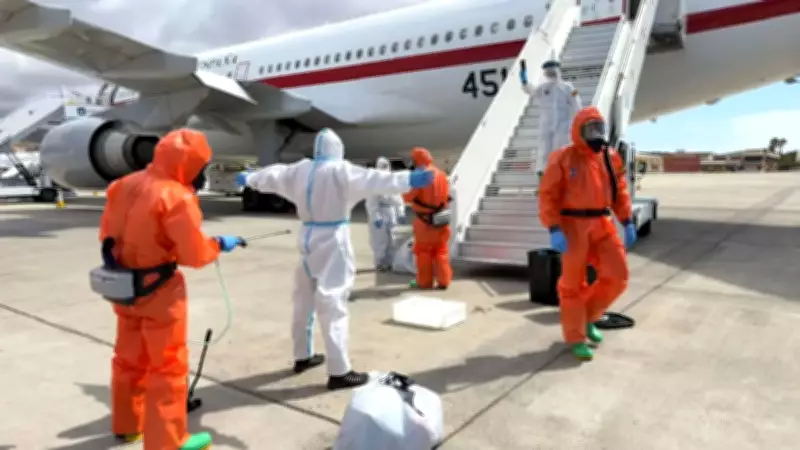
A US passenger evacuated from the hantavirus-hit cruise ship has tested positive for the virus, American health officials confirmed on Sunday, with an update that he has not yet shown any symptoms. With the spread of this virus, many countries have rushed to quarantine and monitor passengers returned from the ship.
Infected US Passenger Transferred to Nebraska Biocontainment Unit
The infected American, one of the 17 US citizens evacuated from the ship, is not showing any symptoms and will be transferred to the Nebraska Biocontainment Unit upon arrival in Omaha. Other passengers will also undergo assessment and monitoring at the National Quarantine Unit for precautionary purposes.
French Passengers Develop Symptoms During Flight
The development came hours after French Prime Minister Sebastien Lecornu announced that one of the five French passengers also developed symptoms during the flight and the flight was restored to Paris. All five passengers were immediately placed in strict isolation testing.

MV Hondius Arrives in Tenerife Amid Deadly Outbreak
The MV Hondius, the hantavirus-hit cruise ship, arrived on Sunday in Tenerife, Spain, on the Canary Islands after a deadly hantavirus outbreak linked to the ship left three people dead and at least five more passengers infected. More than 140 passengers from over 20 countries were present during the emergency evacuation.
WHO Reassures Public: Low Risk, Not Another COVID
The World Health Organization reassured that the outbreak does not pose a major threat to the public. “This is not another COVID,” WHO Director-General Tedros Adhanom said. “The risk to the public is low. People should not panic.”
Hantavirus Transmission and Symptoms
Health experts say that the hantavirus mainly spreads through exposure to contaminated rodent droppings and is not easily transmitted between humans. However, in rare cases, the Andes strain (a specific type of hantavirus found mainly in South America) detected in this outbreak can spread between people in rare cases. Symptoms can appear anywhere between one and eight weeks after exposure.
Global Monitoring and Quarantine Measures
WHO epidemiologist Maria van Kerkhove said the countries receiving passengers have been advised to conduct active daily health monitoring and quarantine measures. Several countries have already imposed strict isolation protocols lasting up to six weeks.