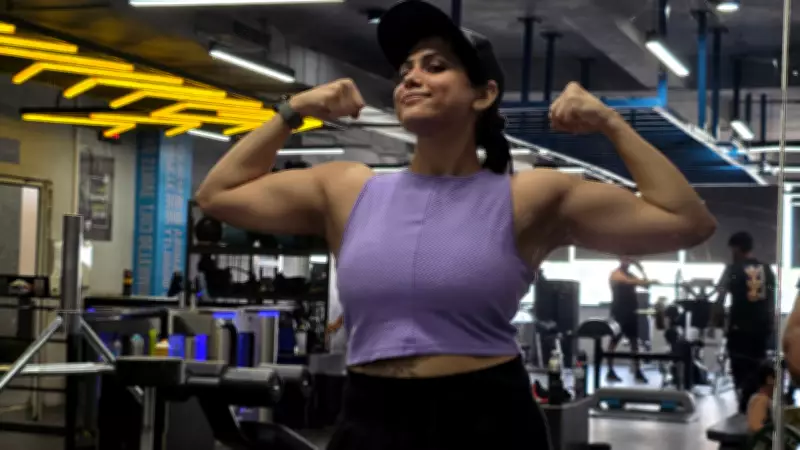
When Dr. Ambika Dutt talks about women and strength training, she is not just discussing fitness. She is talking about identity, confidence, and the quiet rebellion happening in gyms across the country. As a fitness expert who has watched women's relationships with their bodies transform, she has become something of a translator between the old world of fitness for women and the new one that is emerging.
We sat down with her to understand why 'too muscular' stopped being an insult and why more women are embracing strength like never before.
Challenging Traditional Notions of Femininity
'For a long time, society has associated femininity with being delicate, slim, and physically smaller, while strength and muscles were seen as masculine traits,' Ambika explains. 'So when women build muscle or prioritise strength training, it challenges those traditional ideas of how women are supposed to look.'

She has been in the fitness industry long enough to see how the language changed. Women would come in asking to get 'toned,' which usually meant they wanted definition without actual visible strength. The implication was always clear: strength is fine, but make sure nobody can see it too much.
'The fitness industry reinforced this idea that women should be fit but not visibly strong,' Ambika says. 'We offered cardio classes, dance cardio, yoga. If women wanted to get defined, they would do light weights with high repetitions, enough to create some tone but not enough to actually look powerful. The goal was always to be fit, but not too fit.'
A Shift from Appearance to Well-Being
'Today, more women are realizing that fitness is not just about becoming thin; it is about becoming healthier, more energetic, and more confident,' Ambika says. This shift sounds simple, but she emphasizes how significant it really is. Women started asking different questions. Not 'will this make me look good?' but 'what can my body do? How do I want to feel?'
'Women today are increasingly prioritising strength training, nutrition, and overall wellness over unrealistic beauty standards,' she continues. 'Earlier, fitness for women was mostly linked to weight loss, but now conversations around muscle health, hormones, mental well-being, and longevity are becoming more common.'
The Role of Social Media
'Social media has also helped women see stronger and more realistic body types, which is encouraging healthier perspectives around fitness,' Ambika says. It is a strange paradox, she explains. Instagram spent years showing women impossible standards. But it also eventually showed them other women. Real women. Strong women who did not fit the old ideal but looked undeniably powerful and healthy.
'It is like women could finally see that there were other options beyond what they had been told was acceptable,' Ambika says.
But as more women built muscle and started taking up space confidently, the criticism did not disappear. It just changed targets.
Mothers Who Stopped Apologizing
One of the most significant shifts Ambika has witnessed is among mothers. This is where the personal becomes political.
'It is extremely important, especially for mothers,' Ambika says, her tone shifting to something more passionate. 'Women have traditionally been expected to prioritise everyone else before themselves, often neglecting their own health in the process. But taking care of your health is not selfish, it is necessary.'
'Strength training is not just about appearance; it improves energy, mobility, mental health, bone strength, and overall quality of life,' Ambika explains. 'For mothers especially, being physically strong helps them manage everyday responsibilities more actively and confidently.' There is a practical element, she points out. A strong mother can pick up her child without injury. She has the energy to play with them. Her mental health improves with exercise. But there is something deeper too.
'Normalising these conversations also sets a positive example for future generations,' Ambika says. 'Children who grow up seeing women prioritise health and self-care are more likely to develop healthier attitudes themselves.'

Strong Women Still Face Criticism
'Social media often criticises women for looking too muscular or too strong,' Ambika says bluntly. 'A woman will post a photo of her physique after months of disciplined training, and the comments roll in. You look manly. That is not feminine. You went too far.'
'Strong women especially face criticism because they challenge traditional expectations of femininity,' Ambika explains. 'Many people still believe muscles make women look less feminine, when in reality strength and femininity can absolutely coexist. A woman taking care of her health and building strength should not be seen negatively.'
'I also think confidence in women can sometimes make people uncomfortable, especially online where criticism is easy,' she says. There is something about a woman who is comfortable in her own strength, who does not apologize for taking up space, that triggers something in people. The anonymity of social media just makes it easier to express that discomfort as cruelty.
The Fundamental Truth
'Muscles are not masculine, they are human. A strong body reflects health, discipline, and consistency, not gender,' Ambika says simply. She adds: 'I think people are simply not used to seeing women take up space confidently, especially physically. But that mindset is slowly changing as more women prioritise health over outdated beauty standards.'
Ambika does not hesitate. 'Women deserve to feel strong, healthy, and confident without being judged for it.'
It is a statement that sounds straightforward. But for anyone who has grown up being told to make themselves smaller, to apologize for taking up space, to worry about looking too strong, it is actually revolutionary.
The woman in the gym lifting weights that make people question her femininity is not breaking anything. She is just existing. Taking care of herself. Living in her body with intention. That this still feels like an act of rebellion says everything about how far we still have to go.