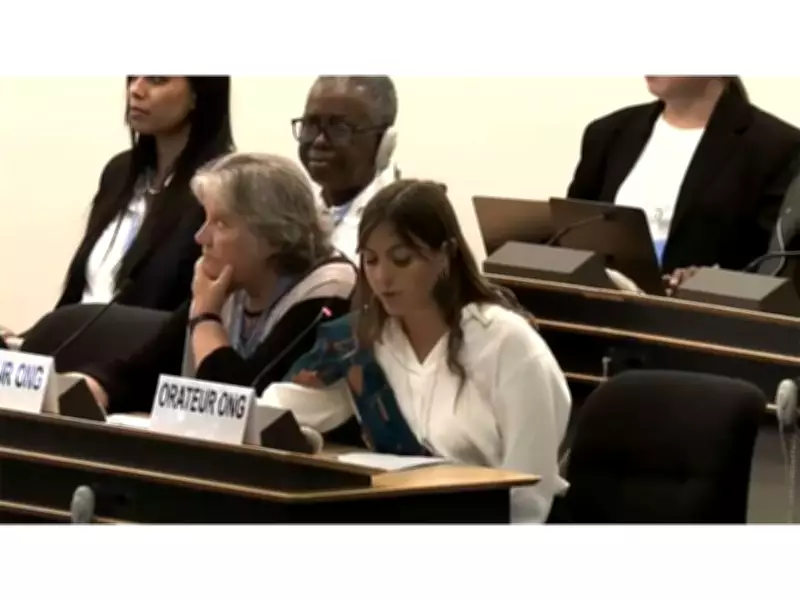
At the 62nd Session of the United Nations Human Rights Council (UNHRC) in Geneva, India's multi-pronged approach to combating domestic violence was highlighted, emphasizing the synergy between legal frameworks, institutional mechanisms, and community-led initiatives. Speaking at the session, Sambhali Trust volunteer Lara Mailen Delutis underscored the importance of protecting the rights and dignity of women and children affected by domestic violence.
Legal and Institutional Frameworks
Delutis noted that India's legal safeguards, women's helplines, protection systems, and public institutions provide crucial support for victims. Civil society organizations help bridge gaps through counseling, legal guidance, rights awareness, and livelihood training. The Nirbhaya Project and Empowerment Centres were cited as key initiatives that empower marginalized and vulnerable women by providing access to support services and economic opportunities.
Preventive Education and Community Support
Delutis emphasized the importance of preventive education, including life-skills training and awareness programmes on personal safety and respect among adolescents. She highlighted India's tradition of community support and inclusion, stating, "International solidarity is not only about cooperation between States, but also about human compassion that transcends borders, communities and identities." Drawing on Sambhali Trust's work in western Rajasthan, she shared experiences of supporting women, children, migrant and displaced families, and gender minority communities through education, healthcare access, counseling, skills training, and social support programmes.

Role of Civil Society
Delutis told the Council, "India's long social tradition of community support, together with public systems for education, health, legal aid and welfare, creates space for local inclusion." She emphasized that civil society organizations play a critical role in complementing government efforts by building trust within communities and helping people access essential services without fear or discrimination. The remarks reflected India's comprehensive strategy for women's empowerment and protection, combining government support mechanisms with community-led interventions to create a safer and more inclusive society.